An evaluation of Regional Minerals Certification Mechanisms on Mitigating harm from Critical Minerals: A case of KP, ICGLR, RMI & OECD Certification Mechanisms

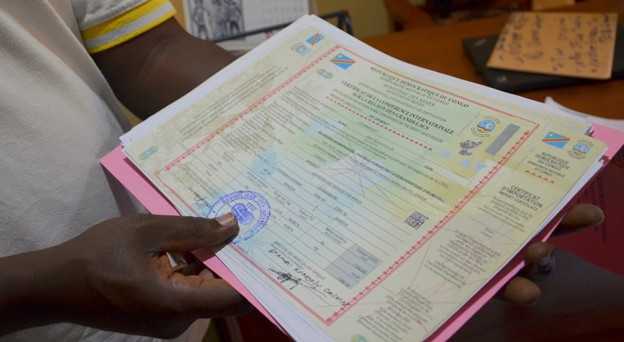
Photo Credit: ICGLR
Authors:  Moses Kulaba and Roger Vutsoro, Governance and Economic Policy Centre

Introduction

Decades ago, mineral certification was mooted as a solution to addressing the chronic problems of illegal mining, mineral smuggling and mineral driven conflicts, economic injustices and impunity in mineral rich countries.  To this regard, regional and global mineral certification mechanisms were developed with countries and mining companies required to sign up to these new certification principle and mechanisms. However, decades after, minerals continue to be drivers of conflict and harm in many countries.

As the appetite for Critical or Transitional minerals required for the green and clean energy industrial technology gains gusto momentum, there are concerns that this new mineral dash may exacerbate corruption, conflict and suffering in critical minerals rich countries. Apart from calls to establish regional value chains, there is evidence to suggest that a proper global certification mechanism should be put in place to ensure responsive sourcing of critical minerals and that their extraction does not lead to further harm.

This short analytical study explores the existing   national, regional and global certification mechanisms such as the Kimberly Process, ICGLR, OECD Due diligence measures, Responsible Mining Initiatives in the quagmire of improving of minerals governance. It entangles and assesses the increasing perceptions (based on evidence from countries such as the DRC and Ukraine) that the current certification regime is running dangerously obsolete, not designed for critical minerals and thus needs a review and realignment for new purpose, including proposing measures that go beyond the current regional certification.

The brief makes recommendations for the review and expansion of the current existing certification mechanisms. It is relevant and targets stakeholders such as the ICGLR and the Kimberly Process Secretariate, EAC & ICGLR member states, African Union Minerals Development Centre, UNOSEGLR, UN Critical Minerals High Level Panel and the UN SG and civil society organisations interested in stopping human rights abuse illegal smuggling and trading of blood and conflict critical mineral minerals.

What is mineral certification

Mineral certification is a process that verifies the origin and legitimacy of minerals, ensuring they are not associated with conflict or human rights abuses. It involves tracing minerals from the mine site to the final point of export and confirming they are free from illegal activities. This helps to prevent the financing of armed groups and other illicit activities linked to mineral extraction. This certification involves a thorough verification process to trace the minerals’ origin and verify they are free from illegal financing, armed group involvement, and human rights abuses.

At face value, this sounds like a good measure, however existing mechanisms of a similar nature such as the Kimberly process, ICGLR certification initiative and the OECD Due diligence measures have not succeeded in fully addressing the issue of conflict minerals and mineral smuggling. In Countries such as the Democratic Republic of Congo and Mozambique, minerals continue to be a driver of conflict and mineral smuggling to neighboring countries is still rife.  This therefore puts to question the efficacy of the existing global certification mechanism in strengthening governance, regulating supply, improving ethical mining business conduct and reducing harm from extractive resources.

Existing major Regional and Global Mineral Certification regimes

1. The Kimberly Process Certification System (KPCS)

The Kimberly Process (KPCS) is a global standard certification process established in 2003 by the United Nations General Assembly (Under resolution 55/56) to prevent conflict diamonds from entering the mainstream diamond market.  KPCS was set up to ensure that diamonds as precious minerals are sourced and traded in a responsible manner, reducing financing conflicts and human rights violation.

KPCS has laid out requirements for participating member countries to comply including[1] enforcement of regulatory standards to control export and import of rough diamonds, principles of transparent practices to ensure integrity of the diamond supply chains, selective trading with only KP certified and compliant members, verification of exports to ensure every traded diamond is accompanied by a conflict free certificate and an obligation for member countries to enforce theses standards. To date 60 participants (representing 86 countries) are signatory members to the Kimberley process and have committed to applying KP principles in the certification of its traded diamonds.

National Level Governance and Implementation of the Kimberly Process; A case of Tanzania

In Tanzania the Kimberly Process Office is situated in the Mining Commission, an Institution within the Ministry of Minerals. This office is responsible for the implementation of the KPCS activities, import and export of rough diamond; the office is under the authority of the Executive Secretary. The Mining Commission works closely with the Tanzania Revenue Authority’s Customs Department, Tanzania Intelligence and Security Service and the Police Force for strengthening internal control. The Kimberley Process Office forms a part of the Mineral Audit and Trade Department, which is under the Director for Mineral Audit and Trade who assists the Executive Secretary in administering the KPCS activities. The office issues Annual reports.

Before the issuance of Kimberley Process Certificate, the exporter of rough diamonds must submit a valid Dealer’s license/Mining license, which allows him to export minerals outside Tanzania. The Dealer’s license indicates full address, type of minerals, the premises and signature of Executive Secretary or a person authorized to sign. The exporter fills the application form which indicates license type, license number, weight, value, source of diamonds to confirm that diamonds are conflict free, place of export and declaration of exporter by putting his/her signature, name and qualification to apply for a certificate and pays to the government USD 100 as an application fee for Kimberley Process certificate. Post to the valuation process, the exporter is required to pay royalty (6% of a value) and inspection fee (1% of value) to the Government.

Any person who contravenes any of the provision in Diamond trading regulation commits an offence and liable:  In case of an individual to imprisonment for a term not exceeding three years or to a fine not exceeding US dollar twenty thousand (US$ 20,000) or to both. In case of body corporate, to a fine not exceeding US dollar one hundred thousand (US$ 100,000), or c. Cancelation of his license and permanently be disqualified from prospecting, mining or dealing in diamond and any other minerals.  Any rough diamonds obtained contrary to the provisions of Diamond trading regulations shall be forfeited in addition to other penalties[1].

The International Conference on Great Lakes Region (ICGLR) Mineral Certification Measures

The ICGLR Certification mechanism was developed to address the persistent of mineral driven conflicts in the Africa Great Lakes region. It aims to create a conducive environment for cooperation among member states while also ensuring the protection and well-being of the people living in the Africa Great Lakes region.

The ICGLR Certificate confirms a mineral shipment is conflict-free and meets the ICGLR’s ethical sourcing standards, ensuring it’s free from illegal influence and responsibly traced from mine to market. This certification involves a thorough verification process to trace the minerals’ origin and verify they are free from illegal financing, armed group involvement, and human rights abuses. It provides buyers with the assurance that the minerals meet ICGLR requirements for transparency, legality, and responsible sourcing, supporting ethical supply chains in the region[1].

Currently the DRC, Uganda, Kenya, Rwanda and Burundi are members to the ICGLR’s certification mechanism. Mineral flows are analyzed via an ICGLR Regional Database, using the data on individual shipments collected and transmitted to the ICGLR by each Member States.  The database is verified annually via ICGLR Third Party Audits. The mechanism is viewed as an important regional standard and tool for enhancing collaboration, transparency, and development in Africa’s Great Lakes region, promoting accountability and encouraging businesses to pursue certification for adherence.  

The OECD Due Diligence Guidance for Responsible Mineral Supply Chain

Requires that company supply chains of all minerals from conflict affected and high-risk areas, must respect human rights and avoid contributing to conflict through their mineral or metal purchasing decisions and practices. Recognizes that trade and investment in natural mineral resources hold great potential for generating income, growth and prosperity, sustaining livelihoods and fostering local development. However, a large share of these resources is located in conflict affected and high-risk areas. In these areas, exploitation of natural mineral resources is significant and may contribute, directly or indirectly, to armed conflict, gross human rights violations and hinder economic and social development[2].

The OECD Due Diligence Guidance is considered as the first example of a collaborative government-backed multi-stakeholder initiative on responsible supply chain management of minerals from conflict-affected areas. Its objective is to help companies respect human rights and avoid contributing to conflict through their mineral sourcing practices[3].

The Guidance is also intended to cultivate transparent mineral supply chains and sustainable corporate engagement in the mineral sector with a view to enabling countries to benefit from their mineral resources and preventing the extraction and trade of minerals from becoming a source of conflict, human rights abuses, and insecurity. With its Supplements on Tin, Tantalum, Tungsten and Gold, the OECD Guidance provides companies with a complete package to source minerals responsibly in order for trade in those minerals to support peace and development and not conflict
[4]

Responsible Minerals Initiative (RMI)


The Responsible Minerals Initiative (RMI) is a voluntary membership body of companies and industry players with a vision to ensure that mineral supply chains contribute positively to social economic development globally. It seeks to promote the common goal of understanding and contributing to mitigating the salient social and environmental impacts of extraction and processing of minerals in supply chains. It leverages partnerships and use of international standards such as the United Nations Guiding Principles on Business and Human Rights or the OECD Due Diligence Guidance as guideposts[5].

Comprised of more than 500 member companies; the Responsible Minerals Initiative is considered one of the most utilized and respected resources for companies from a range of industries addressing responsible mineral sourcing issues in their supply chains. RMI provides companies with tools and resources to make sourcing decisions that improve regulatory compliance and support responsible sourcing of minerals from conflict-affected and high-risk areas. RMI undertakes due diligence, assurance and reporting templates for cobalt, gold, tin, tungsten, tin, tantalum and other minerals.

The Nexus between Critical Minerals, Conflict and Harm

There is a strong connection between the extraction and trade of certain minerals and the exacerbation of armed conflicts and instability in various regions, particularly in developing countries. Globally, critical minerals fueling Green Tech are also fueling conflict[6] Armed groups often exploit the demand for these minerals (like tin, tantalum, tungsten, and gold, collectively known as “conflict minerals”) to fund their operations, including the purchase of weapons[7]. This reliance on minerals to fuel conflict can lead to human rights abuses environmental degradation, and social unrest, hindering sustainable development. 

Critical minerals such as bauxite, manganese cobalt, lithium and uranium have fuelled conflicts in the DRC, Guinea, Niger, Mali, Chad and Central Africa Republic[8] Myanmar has also experienced a post-coup rush for control over its rare earth minerals, while Latin American countries like Chile and Colombia are grappling with how to ensure that their lithium wealth benefits local economies rather than multinational corporations[9].

Critical Minerals and conflict; A case for DRC and Ukraine

Multiple reports produced by UN and Civil society show that the ongoing violence in the DRC is linked to mineral extraction, with rebel insurgents motivated by a desire to extract from the region’s vast cobalt and coltan reserves. Since the onset of the infamous second Congo War in 1998, control over the DRC’s vast mineral resources has fuelled conflict between armed groups and militias. These factions fight over mining territories, using profits from the illegal extraction and smuggling of conflict minerals to finance their operations and purchase weapons. The struggle for control over mineral-rich areas has led to prolonged violence, contributing to the deaths of millions and leaving entire regions destabilized[1]. Through taxation and smuggling of minerals, armed groups are financially benefiting from DRC’s mineral resources. For instance, The UN Group of Experts estimated that armed groups based in Ituri Province generated approximately $140 million USD in 2024, dwarfing the illicit revenue generated by 3Ts[2]. In light of this reality, the abundance of critical minerals offers a potential opportunity for economic wellbeing but the dash for their control and extraction has potential of increasing conflicts in Africa[3]  

Moreover, the extraction and trade of some critical minerals has intensified new geopolitical tensions and reinforced long-standing patterns of exploitation[4] including conflicts. According to Global Witness,  the Trump Ukraine proposed deal in 2025 revealed a connection of critical minerals to the Russia and Ukraine war and how natural resources in Ukraine have become a key bargaining chip in international diplomacy between the US and Russia. In the same perspective, the US and the Democratic Republic of Congo signed a minerals-for-security deal, highlighting the increase role of critical minerals in geopolitics and conflict. These case studies clearly show that  geopolitical interests are too heavy to be counterbalanced by the existing mineral certification regimes alone.

Gaps and why a new regime for mineral certification is required

From the above analysis and case studies, the existing major regional and global mineral certification regimes have significant gaps that necessitate that a new certification regime is developed. Their gaps are diverse but can be categorized as follows:

Narrowness in focus and scope: Existing certification mechanisms such KP are narrow in scope largely target diamonds and were not designed to cover a broader mining sector. The ICGLR covers the 3Ts and gold. The emergency of a wider list of critical minerals adds a new context which the KP and ICGLR certification mechanisms were not designed for.
 
Voluntary mechanisms; The existing mechanisms are largely voluntary and member states companies encouraged to join and comply with the standards. For instance, the 21st meeting of the CIRGL Regional Committee on the fight against the illegal exploitation of natural resources recommended ICGLR Secretariat to compile a comprehensive report on the status of implementation of the six tools of the regional certification mechanism. This report revealed that the Republic of Rwanda has not yet established the traceability chain for gold. Instead, Rwanda controls gold extraction and trade using conventional methods and does not issue ICGLR certificates for gold exports[5].”
 
Limited in geographical and legal scope: For instance, the OECD Due diligence Guidance is largely applicable to companies from OECD member countries but with limited enforcement mechanisms in non-OECD countries. Yet mining companies from non-OECD Countries such as China are emerging as the leading exploiters of Africa’s critical minerals according to WTO reports[6]. from the DRC. Chinese based companies own or operate 80 percent of the critical mineral production in the DRC, much of which is sent to China for processing for export via the global supply chain[7] Moreover the ICGLR is confined to its member states while the RMI covers only its 500 members.
 
Continuous illicit smuggling and trading in conflict minerals despite the presence of current certification mechanisms. For instance, despite its membership to the Kimberley Process (KP) and ICGLR commitments, Tanzania’s diamond sector is reported as facing entrenched governance challenges such as opaque supply chains, smuggling, and minimal community benefits. Tanzania’s diamonds have suffered from environmental concerns, price volatility from synthetics and smuggled diamonds from regional conflicts areas[8].

Moreover, critical minerals including diamonds are smuggled across borders
, transacted in established commercial capitals and hubs such as Kigali, Kampala, Nairobi and Dubai. For instance, a Global Witness investigation report indicates that an international commodities trader bought conflict coltan smuggled from Democratic Republic of Congo (DRC) to Rwanda.[9]  Based on customs documents seen by Global Witness, the investigation revealed that a multibillion-dollar company headquartered in Luxembourg bought 280 tonnes of coltan from Rwanda in 2024.

Despite having limited or no known deposits and operational mines, some countries in East Africa and the Middle East have emerged as leading exporters of critical minerals such as cobalt, lithium and coltan.  Study reports show large volumes of critical minerals transacted via East Africa to foreign markets such as the UAE and China[10].  For instance, in 2025 Kenyan authorities intercepted 10 containers of suspected smuggled copper at the port of Mombasa[11]  These illicitly acquired, smuggled and transacted minerals have found market into the UAE and Western capitals in Switzerland and New York. In 2023 alone, Kenya’s exports of copper to the United Arab Emirates were valued at US$22.27 million. The UAE exports mineral products, including critical minerals, in significant quantities, primarily to Japan, China, and India, despite having little known deposits of these minerals.

Weak in countering new geopolitical interests and ongoing critical minerals driven conflicts in producer countries: The ongoing mineral driven conflicts have already been documented in the cobalt, coltan mineral rich Eastern DRC and elsewhere but the rush for securing access and control of mineral supply chains by global economic and military superpowers is reviving geopolitical interests and may result in new geopolitical conflicts.
 
In the Democratic Republic of Congo (DRC), for instance, since the revision of its mining law in 2018, the country has attracted no responsible Western investors in the mining industry. Meanwhile, China has come to dominate the production of cobalt and copper, primarily mined in the Katanga and Lualaba regions. The recent re-negotiation by the Tshisekedi Administration of the imbalanced minerals-against infrastructure deal signed in 2008 under the Kabila administration between the DRC and China was perceived by China as triggered by the geopolitical influence of United State of America.
 
Aware of the security and economic implications of China’s control over the DRC’s critical minerals supply chain, the United States has signaled its return to the DRC mining sector through the recent acquisition of Australian AVZ Minerals’ assets in the Manono Lithium Project by KoBold Metals. In addition, the U.S. is committed to funding the Lobito Corridor—a strategic railway project essential for transporting critical minerals from the Central African Copperbelt to Western markets.

Through its International Development Finance Corporation (DFC), the U.S. has pledged a $550 million loan to support the Lobito Corridor. This project is considered vital in countering Chinese influence in the region by providing an alternative route for exporting critical minerals. The corridor is viewed as part of the Partnership for Global Infrastructure and Investment, a G7 initiative aimed at competing with China’s growing presence on the continent.

While the Lobito project is designed to challenge Chinese dominance, both Western and Chinese firms will be allowed to use the infrastructure it provides. This dual-access approach raises questions about its strategic value, particularly under a US administration led by President Donald Trump, whose priority is   competition with Beijing. The Lobito Corridor railway could be a physical indicator of the resuscitated geopolitical rivalry and reconvergence of global superpowers on the African continent as a source for critical mineral resources.

Failure to implement due diligence and traceability mechanisms: During the OECD conference on responsible minerals supply chain held in May 2024 in Paris, many Congolese civil society organizations raised concern over the increasing failure in the implementation of due diligence standards in the DRC. CSO mentioned that private sector actors have failed to fully implement supply chain due diligence in alignment with international standards, most notably the OECD Due Diligence Guidance for Responsible Minerals Supply Chains from Conflict-Affected and High-Risk Area. IMPACT added that companies are either turning a blind eye, preferring not to ask questions about the source of their purchases, or have been complicit by over relying on industry schemes despite red flags being raised in  UN Group of Experts reports.

The concern around ITSCI—the sole traceability and due diligence provider for 3Ts in DRC—has been so great that in 2024 it lost its recognition with the Responsible Minerals Initiative (RMI), with RMI noting that important gaps remained in the scheme’s fulfilment of recognition terms. Despite this move, the UN Group of Experts has expressed concern that many private sector actors still rely on the scheme to conduct due diligence without carrying out additional independent quality controls required by international standards[12].

Civil Society Concerns and call for reforms

Because of these gaps civil society organisations have constantly called for a review and development of a new certification mechanism regime, expanded and aligned to emerging context of transition minerals. For instance, at the start of the 2025 KP plenary in Dubai the Civil Society Coalition pointed out the gaps of the KP in addressing the challenges of diamond mining, smuggling and poverty in the Central African Republic[13]

CSO observed that the KP was narrow in focus, limited to diamonds and the imposed conflict diamond embargos had targeted smugglers without protecting the diamond mining communities. The KP does not—and likely will not soon—prevent diamonds from being associated with issues outside the narrow conflict diamond definition, including human rights abuses, violence by public and private security forces, forced labour, and environmental degradation. Rigorous due diligence is essential, yet it remains insufficiently addressed.

Further,  the instance, the KP in Central Africa Republic’s (CAR) experience demonstrated that the sole existence of the certification scheme does not make diamond governance exemplary. Though diamonds share similar governance challenges with other minerals, the Kimberley Process has largely remained isolated from broader dialogues on mineral-related due diligence.
Civil society demanded for the need to bridge the gaps in the KP certification mechanism by inter alia increasing transparency and engagement with mining communities.  CSOs argued thatwithout transparency, the KP will never effectively achieve its mandate of conflict prevention.

Moreover, the existing certification mechanisms are criticized as elitist, disconnected from the community needs and blind to social economic injustices. For example, the KP certification mechanism does not cover the extent to which the mining of the diamond minerals has benefited the communities from where they are sourced. Investigations by the Kimberly Process Civil Society Coalition of mining operations in Sierra Leone, Lesotho, and the Democratic Republic of Congo, reveals the often-ignored consequences of large-scale diamond mining on local communities in African countries[14].

In Tanzania, despite mining diamonds for more than 100 years, Shyinyanga remains amongst the poorest region in the country[15]. The critical minerals rich Eastern DRC provinces of Kasai Oriental, Kasai Central, North and South Kivu are among the poorest and least developed in the world. 

For diamond resources to truly benefit communities, the documentary identifies greater transparency and independent monitoring as key elements to enhance corporate accountability. Mining companies, industry actors and states all have a role to play to protect community rights and improve both mining and sourcing practices[16].

Further, certification mechanisms do not sufficiently cover or protect citizen against state excesses and inspired violence. Yet the very atrocities committed by rebel groups, which led to the KP’s creation in 2003, are now mirrored by certain governments and their security forces. Top ranking government officials and security forces in the Eastern DRC have been accused of being complacent to illicit mineral trade, despite the existence of the ICGLR certification mechanism.

Conclusion

While certification mechanisms such as the Kimberly process were established for a major purpose of controlling blood diamonds over the years, they have played this role to an extent but equally shown inherent gaps and shortcomings. Their limitation in scope, involuntary membership nature and poor implementation is a major limitation. They were set up when diamond was among the top most traded commodity and driver of conflicts in countries such as Angola, Liberia and Siera Leone. With the increasing surge in demand for critical minerals such as Nickel, Cobalt, Coltan, Graphite, Lithium, Tin Tungsten and Rare Earth Elements, the new frontiers mineral driven conflicts have expanded and cannot continue to remain on diamonds.  In the current and future context, it will be untenable for critical minerals to remain outside the purview of mineral certification. For the existing certification mechanisms to be relevant and fitted for the changing context and era of energy of transition, substantive reviews and reforms are required.

Recommendations for future certification mechanisms

1. Expand the KPI and ICGLR certification to cover a broad range of  critical minerals or develop a new commensurate certification measure for critical minerals, with a focus on ethical sourcing, conflict and governance.

2. Pay attention to the ongoing problems in mining such as the environmental concerns in critical minerals mining operations and their contribution to social and ecological harm to communities and countries from where they are sourced.

3. Pay close attention to ongoing issues within critical minerals supply chains, including human rights abuses, armed conflicts, the fair distribution of benefits to local communities, and compliance with national labor laws

4. Review the existing mineral audit standards, blend composition of  audit teams with experts, civil society and community representatives to increase transparency and integrity in certification

5. Require exporting countries to demonstrate significant economic presence of the critical mineral commensurate with export volumes.

6. Impose export embargoes and critical mineral trading sanctions on countries or companies involved in perpetrating smuggling and export of illicitly acquired and conflict critical minerals.

7. Expand the scope of existing certification mechanisms such as the Kimberly process to capture community benefits from diamonds and critical minerals.

8. Demand that membership to regional and global certification and tracking mechanism must be mandatory for all critical minerals producing and exporting countries

9. Countries that produce critical minerals should diversify their investors and pursue win-win partnerships to prevent their territories from becoming geopolitical battlegrounds for superpowers competing for access to these resources in the era of energy transition

10. Enhance public database and reconciliation system for tracking mineral flows from mining, purchases, and exports at various levels of the value chain
 
11. Mineral certification must be complemented with value addition. This approach will facilitate technology transfer, generate more jobs to stimulate economic growth, and reduce susceptibility to conflict and mineral smuggling
 
References

Aikael Etal (2021) Understanding poverty dynamics and vulnerability in Tanzania: 2012–2018 available at https://onlinelibrary.wiley.com/doi/10.1111/rode.12829  accessed on 15 May 2025
Martin A, etal (2014), All that Glitters is not Gold: Dubai, Congo and the illicit trade of critical minerals, Partnership Africa Canada, May 2014
 
Andy Home, After Ukraine deal, US turns its critical minerals gaze to Africa, available at https://www.reuters.com/markets/, accessed on May 22
 
Global Witness (2025) available at https://globalwitness.org/en/press-releases/new-investigation-suggests-eu-trader-traxys-buys-conflict-minerals-from-drc/ accessed on 15 May 2025
 
IMPACT, Actors Must Suspend Sourcing Minerals Financing Armed Groups in Democratic Republic of Congo, available at https://impacttransform.org/, accessed on May 23, 1:46pm
ICGLR, Report on the Status of Implementation of the Six Tools of the ICGLR Regional Initiative on Natural Resources in Member States, P14
ISSD (2018) Green Conflict Minerals; The Fuels of conflict in the transition to a low carbon economy;  available at https://www.iisd.org/story/green-conflict-minerals/ accessed on 15 May 2025
Panzi Foundation available via https://panzifoundation.org/conflict-minerals-and-sexual-violence-in-the-drc/# accessed on 15 May 2025
The African Climate Foundation Report; Geopolitics of Critical Minerals in Renewable Supply Chains  available at https://africanclimatefoundation.org/wp-content/uploads/2022/09/800644-ACF-03_Geopolitics-of-critical-minerals-R_WEB.pdf  accessed on 15 May 2025
The Eastleigh Voice (2025); Police launch investigation into suspected copper smuggling at Mombasa port; available at https://eastleighvoice.co.ke/business/112007/police-probe-suspected-copper-smuggling-at-mombasa-port accessed on 15 May 2025
 
US International Finance Cooperation https://www.dfc.gov/investment-story/strengthening-critical-mineral-supply-chains-countering-chinas-dominance#:~:text=But%20critical%20mineral%20supply%20chains,sent%20to%20China%20for%20processing.
WTO (2024): High demand for energy-related critical minerals creates supply chain pressures; available at https://www.wto.org/english/blogs_e/data_blog_e/blog_dta_10jan24_e.htm#:~:text=Exports,all%20at%206%20per%20cent). Accessed on 15 May 2025
 
Online sources
https://www.oecd.org/investment/mne/49111368.pdf
https://www.responsiblemineralsinitiative.org/
https://www.kpcivilsociety.org/press/beyond-shining-illusions-new-documentary-exposes-the-unspoken-realities-of-diamond-mining-in-african-countries/


[1] Panzi Foundation available via https://panzifoundation.org/conflict-minerals-and-sexual-violence-in-the-drc/# accessed on 15 May 2025
[2] IMPACT, Actors Must Suspend Sourcing Minerals Financing Armed Groups in Democratic Republic of Congo, available at https://impacttransform.org/, accessed on May 23, 1:46pm
[3] The African Climate Foundation Report; Geopolitics of Critical Minerals in Renewable Supply Chains  available at https://africanclimatefoundation.org/wp-content/uploads/2022/09/800644-ACF-03_Geopolitics-of-critical-minerals-R_WEB.pdf  accessed on 15 May 2025
[4] Global Witness; Critical Minerals Fuel Conflicts available via  https://globalwitness.org/en/campaigns/transition-minerals/the-critical-minerals-scramble-how-the-race-for-resources-is-fuelling-conflict-and-inequality/#:~:text=How%20are%20critical%20minerals%20driving,communities%20in%20resource%2Drich%20nations. Accessed on 15 May 2025
[5] ICGLR, Report on the Status of Implementation of the Six Tools of the ICGLR Regional Initiative on Natural Resources in Member States, P14
[6] WTO (2024): High demand for energy-related critical minerals creates supply chain pressures; available at https://www.wto.org/english/blogs_e/data_blog_e/blog_dta_10jan24_e.htm#:~:text=Exports,all%20at%206%20per%20cent). Accessed on 15 May 2025
[7] US International Finance Cooperation https://www.dfc.gov/investment-story/strengthening-critical-mineral-supply-chains-countering-chinas-dominance#:~:text=But%20critical%20mineral%20supply%20chains,sent%20to%20China%20for%20processing.
[8] URT:  Ministry of Minerals, Mining Commission; A Report on implementation of the Kimberly Process Certification Scheme for Tanzania Year 2023
[9]Global Witness (2025) available at https://globalwitness.org/en/press-releases/new-investigation-suggests-eu-trader-traxys-buys-conflict-minerals-from-drc/ accessed on 15 May 2025
[10] Martin A, etal (2014), All that Glitters is not Gold: Dubai, Congo and the illicit trade of critical minerals, Partnership Africa Canada, May 2014
[11] The Eastleigh Voice (2025); Police launch investigation into suspected copper smuggling at Mombasa port; available at https://eastleighvoice.co.ke/business/112007/police-probe-suspected-copper-smuggling-at-mombasa-port accessed on 15 May 2025
[12] IMPACT, Actors Must Suspend Sourcing Minerals Financing Armed Groups in Democratic Republic of Congo, available at https://impacttransform.org/, accessed on May 23, 1:46pm
[13] https://www.kpcivilsociety.org/activity/kimberley-process-lifts-ineffective-embargo-end-of-an-era-for-the-central-african-republic-and-another-clear-signal-that-conflict-diamond-scheme-needs-serious-fixing/
[14] Kimberly Civil Society Coalition (2025); BEYOND SHINING ILLUSIONS: New documentary exposes the unspoken realities of large-scale diamond mining available at https://www.kpcivilsociety.org/press/beyond-shining-illusions-new-documentary-exposes-the-unspoken-realities-of-diamond-mining-in-african-countries/ accessed 15 May 2025
[15] Aikael Etal (2021) Understanding poverty dynamics and vulnerability in Tanzania: 2012–2018 available at https://onlinelibrary.wiley.com/doi/10.1111/rode.12829  accessed on 15 May 2025
[16] ibid

[1]ICGLR; available via https://icglrcertification.com/ accessed 13 May 2025
[2]OECD Report (2016) available via https://www.oecd.org/en/publications/oecd-due-diligence-guidance-for-responsible-supply-chains-of-minerals-from-conflict-affected-and-high-risk-areas_9789264252479-en.html, accessed on 13 May 2025

[3] OECD (2016), OECD Due Diligence Guidance for Responsible Supply Chains of Minerals from Conflict-Affected and High-Risk Areas: Third Edition, OECD Publishing, Paris, https://doi.org/10.1787/9789264252479-en.
[4] ibid
[5] https://www.responsiblemineralsinitiative.org/
[6] https://www.worldpoliticsreview.com/critical-minerals-conflict-eu/
[7] European Commission: Trade and Economic Security, Conflict Minerals regulation available at https://policy.trade.ec.europa.eu/development-and-sustainability/conflict-minerals-regulation_en#:~:text=In%20politically%20unstable%20areas%2C%20armed,mobile%20phones%2C%20cars%20and%20jewellery. Accessed on 15 May 2025
[8] ISSD (2018) Green Conflict Minerals; The Fuels of conflict in the transition to a low carbon economy;  available at https://www.iisd.org/story/green-conflict-minerals/ accessed on 15 May 2025
[9] ibid

[1] The United Republic of Tanzania: Mining Commission; A Report on implementation of the Kimberly Process Certification Scheme for Tanzania Year 2023

[1] https://www.kimberleyprocess.com/about/what-is-kp
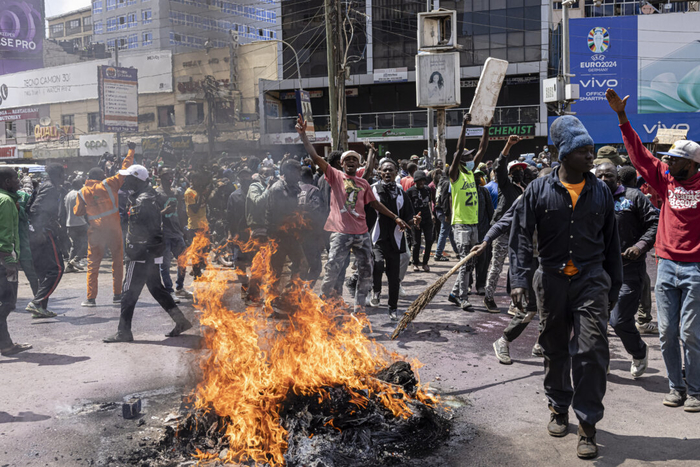
Political Risk and Investment in EA: An Expose of violent tax protests and political risk on Trade and Investment in East Africa

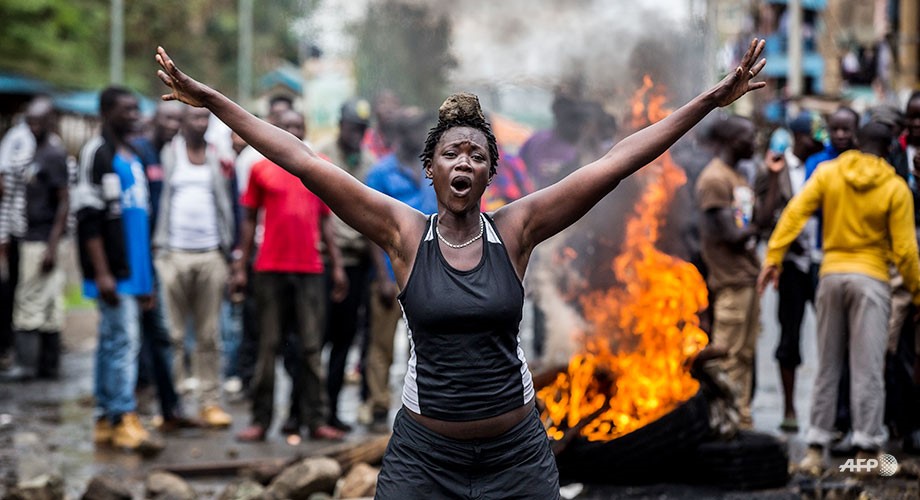
In our previous brief on Tax and Fiscal governance in East Africa, we observed that with dwindling foreign aid, it appears the governments in East Africa have resorted to squeezing everywhere to raise some dime.  We cautioned that Taxation may be good however, when the extremes are beyond reasonableness, governments are bound to break their break the back of the economies they aspire to build[1]. The recent and ongoing tax protests that have rocked the East African regions, with violence and vandalism spiraling out of control in Kenya, clearly underscore this point. A failed tax administration and an irate society.

By Moses Kulaba, Governance and Economic Policy Centre

@taxjustice @politicalrisk

Freedom of expression, the right to picket and demonstrate and resist punitive taxation has been established over the years.  The doctrine of no taxation without proper representation was long established by the Romans, Greeks and Americans during the famous Boston Tea Party 1773) and American war of independence, The French Revolution and the English, paving way into the famous Magna Carta.

This was further advanced by Adam Smith in his legendary Canons of Taxation asserting that generally, a good tax system must be underlined by proportionality and ability to pay[2] and political scientist Harold D Laswell’s tax law of who pays, what and when, and each individual or group should “pay their fair share. These principles that tax liability should be based on the taxpayer’s ability to pay is accepted in most countries as one of the bases of a socially just tax system and generally citizens are duty bound to reject a system that is regarded as unfair and disproportionally beyond their means[3].

However, when peaceful protests and demonstrations strategically drift towards violence, vandalism and murder like the ones we saw in Kenya, then these effectively transform into high level political risks to trade and investment.

According to multiple sources a political risk is a type of risk faced by investors, corporations, and governments that political decisions, events, or conditions will significantly affect the profitability of a business actor or the expected value of a given economic action. In simple terms, a political risk is the possibility that your business could suffer because of instability or political changes in a country: conflicts and unrest, changes in regime or government, changes in international policies or relations between countries, as well as changes that occur in a country’s policies, business laws or investment regulations[4]. Examples of political risks include; unilateral state decisions, war, terrorism, and civil unrest

By their nature, these risks are expensive to be insured against and constitute a major determinant factor for business in deciding where to invest or do business. Highly political risk countries experience sharp declines in investment and may attract low new trade and investments flows.

According to Trade and Investment experts such as Pierre Lamourelle, Deputy Global Head of Specialty Credit within Allianz Trade for Multinationals, the interconnected nature of the global economy makes it very possible that a political risk in one country may affect many businesses across the globe.

“What has changed in the 25 years since I started in this business is that we are living in a more connected world today,” says Pierre. On the upside, that means business is easier to conduct on a global scale. Almost everybody now has the ability to reach out to emerging countries or to conclude a contract and secure a sale in a foreign country.

On the downside, this means that when something goes wrong in one part of the world, you can feel the impact halfway around the globe – directly, if you are dealing with the country in question, or indirectly because of your diverse supply chain. Remember when the 20,000-ton container ship “Ever Given” got stuck in the Suez Canal in March 2021, shutting down international trade for a week?

In today’s increasingly interconnected world, “just-in-time” supply chains, global internet connection, and smartphones give SMEs the ability to conduct business in a global arena. This means the possibility for great opportunities, but also that every business is just steps away from political risk.

Persistent violent tax protests can make it difficult and unpredictable for the government to raise enough tax revenue to finance its obligations, including servicing of sovereign commitments such as paying off its debts and makes the economic environment very unpredictable. This can lead  global economic and financial institutions to flag or down grade the Country’s economic status as risky , making difficult and more expensive for the country and companies to raise external capital for investment.

Moreover, the violent protests occurred or are happening at a critical period of the year when East African Countries such as Kenya record the highest number of tourist arrivals into the Country for the summer holiday. Before the protests, national parks, hotels and beaches in Kenya’s tourist hot spots had already recorded high tourist bookings and were expecting a bumper harvest this season as the global economies and travelers rebound from the COVID 19 lock down.  Reports from multiple travel agents and hoteliers already indicate that most tourists have either cancelled or postponed their decisions to travel to Kenya and East Africa generally. Indeed, some already in the Country were gripped with fear of uncertainty and have left.

The burning image of an old plane at Uhuru Park did not send a good image either as most people around the world, unfamiliar with Kenya, thought Jomo Kenyatta International Airport was attacked and planes on the tarmac set on fire.  A recorded video clip that trended on social media of passengers crammed up at JKIA with a voice note indicating that many were fleeing the country added salt to the pinch suggesting Kenya was not safe anymore!

Similarly, travel advisories have been issued to foreigners in country and intending to travel to Kenya, to do that if it is essential and be vigilant of their security as safety during this violent period cannot be guaranteed. With all these at play, Kenya may remain a blacklisted destination among some foreign tourists for some period to come, denying the country the much-needed foreign revenue and jobs in its service sector. At least a number of high conferences that were planned for Nairobi were cancelled.

The net effects of the demonstrations therefore go beyond having the bill rejected but have long-term economic effects on Kenya’s economy. The violent Gen-Z’s may have to reconsider their approach to avoid a full economic meltdown.

Of course, there are legitimate concerns that some current established large business and investments were already not providing benefits to the young people. Multiple reports have shown that some businesses were tax dodgers while others belong to the politically connected who used their political connections to shove deals and amassing wealth on the backbone of the majority Kenyans. Moreover, given the current loopholes in the governance systems, new trade and investment opportunities would not support or create many new economic opportunities either.

However, when these arguments are advanced, it is also imperative to look at the broader picture of the net effect that violent protests can have on Kenya’s economy and future that the Gen-Z seeks to address. Kenya’s economy is extensively connected and dependent on the global economy with most global business having chosen Nairobi as a regional financial hub.  Violent demonstrations and disruption of such a magnitude can have significant long-term impacts.

With a government under siege and  constrained with a debt tinkering on the margins of default and  unrelenting rancorous youth roaming and burning the streets of Nairobi armed with negative social media, Kenya’s economy could slide into a free fall and recession, whose impacts on everyone could be far reaching.

Taxation and a strong tax system may contribute to improved governance through 3 maximum channels. Taxation establishes a fiscal social contract between citizens and the taxing state. Tax payers have a legitimate cause to expect something in return for paying taxes and are more likely to hold their governments to account. Governments have a stronger incentive to promote economic growth when they are dependent on fair taxes.

In this regard, we suggest the following;

  1. Resistance demonstrations and protests for tax rights must be expressed with limitations and restraint from both sides- The state and citizens alike
  1. Government must be rational when imposing taxes. Tax policies must be clear and predictable.  Clearly, imposing taxes on bread and blanket exemption of choppers is a sign missed priorities.
  1. Government communication apparatus must be robust enough to explain to the citizens the justifications for taxation and the political class must lead by example demonstrating frugality in public expenditure.
  1. There must be distinction between private, public and national critical infrastructure, whose destruction may or can affect Kenya’s national security interest and state existence. Lest we forget, Kenya has been a victim of terrorism and still faces extensive threats from both internal and external elements, whose interests to harm Kenya has never wavered. Attacks on its critical infrastructure exposes the Country and Kenyans further to major threats.
  1. Re-engineering of Kenya’s governance and economy to address the contemporary needs for the Gen-Z. Times have changed and the Gen-Z who now constitute an overwhelming majority will effectively from 2027 be forever a major determinant of East Africa’s political future. Women will no longer be a game changer in electoral politics and outcomes but the Gen-Z will be.
  1. There is need for both political and social sobriety. East Africa needs good leadership and peace!

[1] Tax and Fiscal Governance: Is VAT milking the broken tax cow dry? An analysis of tax trends and impacts on EAC small traders, with a case of the recent traders’ demonstrations and boycotts in Uganda:

[2] Adam Smith, in his book, The Wealth of Nations, 1776

[3] Schronharl, K,  etal; Histories of Tax Evasion , Avoidance and Resistance; https://library.oapen.org/bitstream/id/346cfc5f-6001-40e3-8a3b-fe46405df8c2/9781000823882.pdf

[4] https://www.allianz-trade.com/en_US/insights/what-is-political-risk.html#:~:text=Political%20risk%20is%20the%20possibility,country’s%20policies%2C%20business%20laws%20or

The Petals of Blood: Dissecting the contagion effect of Sudan war on South Sudan and EAC with lessons on governance and state failure

The Sudan war has been raging for almost a year, with catastrophic effects now spreading beyond Sudan’s borders, affecting its neighboring South Sudan and the East Africa Community (EAC) in many ways.

By Moses Kulaba, Governance and Economic Policy Centre & James Boboya, Institute of Social Policy and Research (ISCPR), South Sudan

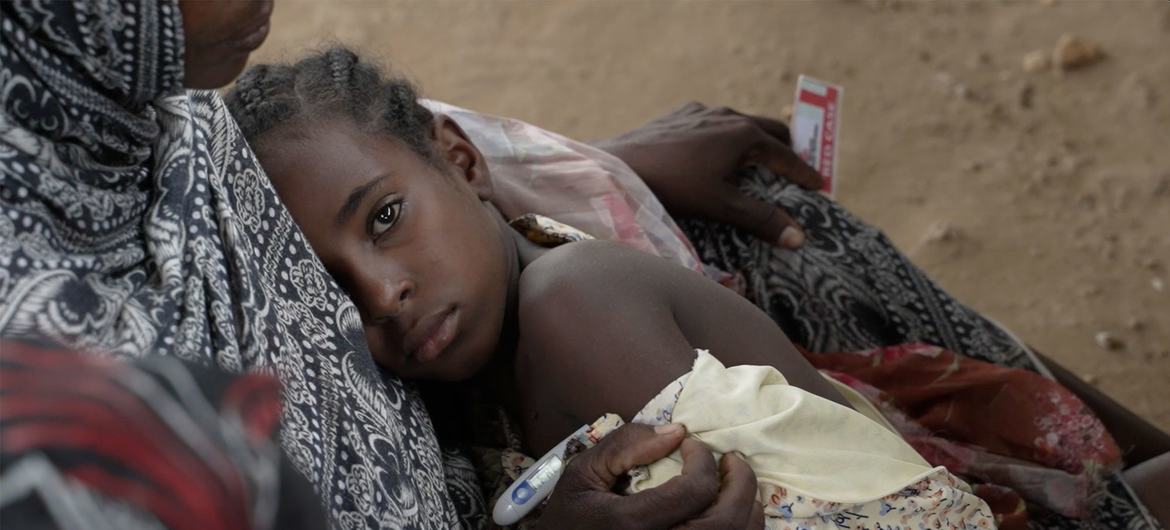
According to the United Nations, since it started, the war has now destabilized the entire region, leading to the deaths of more than 5,000 Sudanese and displacing millions both within the African nation and across seven national borders.[1]  Sudan is now home to the highest number of internally displaced anywhere in the world, with at least 7.1 million uprooted.[2] More than 6 million Sudanese are suffering from famine, and these numbers are growing every day.  The health system has broken down, and more than 1,200 children have died from malnutrition and lack of essential care. [3]The UN now describes the Sudan conflict as a forgotten humanitarian disaster, while the International Crisis Group has warned that Sudan’s future, and much else, is at stake.

Lest we forget, within a short period, the third largest nation in Africa, with a size of more than 1.8886 million square kilometers and at least 46 million people, has no properly functioning government, and all state institutions have collapsed with the effects of its meltdown spilling over to its neighbors, particularly South Sudan.

South Sudan is host to thousands of Sudanese refugees forced across the border into South Sudan, exerting social and economic pressure on an already fragile state that was already sinking under the burden of its own civil war and internal conflicts.

The Norwegian Refugee Council (NRC) reports that more than 500,000 people have now fled from the war in Sudan to South Sudan. [1]This means that over 30 percent of all the refugees, asylum seekers, and ethnic South Sudanese were forced to flee Sudan since the war exploded in April 2023 for protection in one of the poorest places on earth. “South Sudan, that has itself recently come out of decades of war, was facing a dire humanitarian situation before the war in Sudan erupted. It already had nine million people in need of humanitarian aid, and almost 60 per cent of the population facing high levels of food insecurity.

As of 28 January 2024, more than 528,000 ethnic South Sudanese, Sudanese refugees, and other third-country nationals had crossed at entry points along the South Sudan border into Abyei Administrative Area, Upper Nile, Unity, Northern, and Western Bahr El Ghazal. The majority, 81 percent, entered at Jodrah before making their way to the transit center in Renk. Ethnic South Sudanese who have crossed the border from Sudan are commonly referred to as “returnees.” Still, in reality, many of them were born in Sudan and have never been in South Sudan, and therefore have no kinship connection in host communities.

The conflict has spilled deeper into other East African countries, with thousands seeking refuge and safety from it. The education system collapsed, sending thousands of learners back home and hundreds who could afford to flee exile to continue their studies. Some of these were admitted to Rwandan and Tanzanian Universities.

The Sudan and South Sudan experiment was a governance disaster in the waiting and perhaps serves as a lesson of how a firm grip on power, corruption, and misgovernance can ultimately lead to catastrophic state failure and collapse.

Donald Kasongi, Executive Director of Governance Links and a former senior officer with the Accord, a regional conflict organization, describes the post-Garang South Sudan and post-Bashir Sudan as a protracted governance failure. The diverse strategic roles of Khartoum, Beijing, and Washington in the Sweet South Sudanese oil are now evident.  So far, none is a victor.

The role of external interests in shaping national discourse has been at play. Sudan is caught between the interests of the West and the Middle East and China, with both interested in controlling access to Sudan’s resources, cultural wealth, and strategic positioning as a buffer between the North and South. Before the war, Sudan identified itself with the Islamic world and pronounced itself as an Islamic state. Despite this alignment, the OIC and the larger Islamic world has not come to its help. Sudan remains an isolated state left to collapse at its fate.

In South Sudan, the Garang vision of a strong independent nation was lost. After his demise most of the post Garang political elites or military war generals became pre-occupied on restoring the lost years at war by amassing wealth through corruption and sharing out of the limited resources from the oil resources. As a consequence, a strong nation is yet to be built. They had won the war but lost their country. The same mistake plays out in Sudan. Perhaps the conflict is a lesson on what it means to lose what is so dear to one- A country.

In short, the transition in both countries (Sudan and South Sudan) were not well managed and what we see are petals of blood from toxic flowers of bad governance which have flourished like a forest planted along the banks of the river Nile.

According to James Boboya, the Executive Director of the South worrisome. The raging war has made South Sudan’s oil exports via Port Sudan difficult. Oil exports have collapsed by more than half from 160,000 barrels per day in 2022 to 140,000 barrels per day in 2023. This was more than half of the previous peak of 350,000 barrels per day before civil war broke out in 2013.[2] The South Sudanese dollar collapsed in value. There is a financial crunch and the South Sudanese government has not paid its public and civil servants for months. There is a risk of insurrection and demonstrations by public servants that will be likely joined by the military. This would plunge South Sudan into chaos and total collapse just like its Northern neighbor.

Moreover, this conflict and its associated effects comes in an election year for South Sudan.  The general elections are viewed as a watershed moment which may see a transition from President Salva Keir to a new cadre of leadership. With the economic crunch, South Sudan may not be able to organize and fund a credible general election. This will be not good for South Sudan’s democracy and desired future.

With the world’s media focused on the Russia-Ukraine war and the Israel-Gaza wars, little is covered about the Sudan conflicts nor the total economic catastrophe that South Sudan faces.

If not addressed, the Sudan war will be soon inside the borders of the EAC. Can the EAC afford to stand by and watch longer as its member state, collapses.  Mediation efforts led by Kenya and Djbouti were postponed last year. Direct talks between Abdel Fattah al-Burhan, Sudan’s army chief and de facto head of state, and General Mohamed Hamdan Dagalo, known as Hemedti, head of the RSF paramilitaries remain futile.  What can South Sudan and the EAC do now to avert further catastrophe?

During a joint webinar organized by the Governance and Economic Policy Center (GEPC) and the Institute of Social Policy and Research (ISCR) in South Sudan in April, a distinguished panel of experts discussed and enabled us to understand the contradictions and magnitude of this war with implications and lessons on extractive governance, and state collapse drawn for East Africa and Africa generally, can be taken to avert the situation and its contagion effect on the EAC and Africa generally. The panelists and participants highlighted some key lessons and takeaways that can be drawn from the conflict.

Key lessons and takeaways

Ethnicization of politics and governance can lead to a spiral of violence and catastrophic state collapse, especially when the strong ruling elite and regime finally lose control of power.

A previously united Sudan started getting balkanized when the ruling elites started practicing the politics of ethnicity and religion pitting the largely Muslims in the northern and western parts of the country against their Christian southerners.  The Christians were portrayed as slightly inferior, denied political and economic opportunity, and subjected to forced Islamisation, and inhumane conditions such as slavery. Faced with what was considered unbecoming conditions the Southerners opted for a rebellion and demand for independence. The first and second Sudanese civil war (including the Sudanese Peoples Liberation Movement (SPLM/A) were born and the political dynamics in Sudan changed for decades after. New factions such as the Sudanese Liberation Army (SLA) and the Justice Equality Movement (JEM) emerged and Sudan never remained the same.  Sentiments for cessation and independence in Darfur flared and faced with an insurgency, President Omar enlisted militias including the Janjaweed to quell the rebellions. Around 10,000 were killed and over 2.5 million displaced. The balkanisation of Sudan was continuing to play out.

Militarisation of politics erodes democratic values and principles which can take decades to rebuild.

Omar Bashir came to power in 1989 when, as a brigadier general in the Sudanese Army, he led a group of officers in a military coup that ousted the democratically elected government of Prime Minister Sadiq al-Mahdi after it began negotiations with rebels in the south. Omar Bashir subsequently replaced President Ahmed al-Mirghani as head of state and ruled with the military closely fused into the politics and governance of Sudan.

The military elites elevated to power during President Omar Bashir’s government enjoyed privileged positions.  Even with his overthrow in 2019, these generals maintained a firm grip on the Transition Military Council and the Civil-Military Sovereignty Council.  These are less likely to accept any position below total control of the central authority. The net effect is that the return to full civilian and democratic rule of state governance in an entrenched militarized political environment such as Sudan can or may take decades to be rebuilt.

Vulnerability to geopolitical manipulation and fiddle diddle can be a driver to political instability and eventual weak governance

Both Sudan and South Sudan have been victims of well-orchestrated geopolitical game plans from external powers interested in taking control of the rich natural resources wealth that these countries possess. Sudan and South Sudan have vast oil deposits and forestry products.  With eyes focused on these resources external powers succeeded in playing one community against another and one country against the other and successfully throwing the region into an abyss of endless crisis. Religion was used as a tool to play the North against the South and continues to be used in some segments of the Sudanese and South Sudanese communities.

Key Takeaways

  1. The East African Community (EAC) governments cannot afford to take a wait-and-see attitude. The problems facing Sudan and South Sudan are latently present in several other EAC countries. For this reason, therefore without taking lessons from Sudan and South Sudan other countries can also easily erupt in the future, bringing down the entire EAC. The EAC has therefore an obligation to ramp up support for the resumption of the peace process and finding lasting solutions for peace and tranquility in the two countries. For this to happen there has to be trust and objectivity of the actors to the crisis and the EAC mediators. 
  1. Stop ethnicization and militarization of politics and state governance: The Sudan experience demonstrates this, whereby the collapse of President Omar Bashir’s strong grip on power let loose the lid off a can of worms that had eaten the state to its collapse. Similar conditions of ethnic rivalry in state governance have created uncertainty about guaranteed stability in South Sudan. In some other EAC member states there have been attempts to elevate dominant ethnic groups to power and military influence in state politics built around one strong leader. The Sudan experience demonstrates that the absence of such a strong leader holding the center together can lead to a lacuna, leading to a trail of conflict and instability leading governance to fall apart and eventual state collapse.
  1. The EAC countries must stop viewing at South Sudan as merely a market but as an independent viable state whose stability is good for the entire region. According to the EAC trade statistics, South Sudan was the leading market for goods from Uganda and Kenya. With a total population of 11 million and a collapsed agricultural and industrial base, South Sudan has provided a ready market for agricultural goods and manufactured goods from Uganda and Kenya. According to UN Comtrade Data Uganda exported goods worth USD483.9Mln and Kenya’s exports to South Sudan were worth USD170Mln. Uganda’s exports to Sudan also increased by 154% from around USD48Mln in 2016 to USD123Mln in 2022.  With the eyes largely focused on trade opportunities, there can be a tendency to lose track of the human suffering that the people in these countries face. Also, the jostle for geopolitical control over trade deals can overwhelm the genuine solidarity intentions of good neighbors. The EAC members should focus on the stability of these countries. 
  1. The International Community Must not give up on Sudan and South Sudan. Despite the donor fatigue and reports of corruption, the international community has a moral obligation to continue engaging with the protagonists in the war, facilitating the avenues for a peaceful resolution of the conflict and providing humanitarian aid to the suffering people. The Sudan and South Sudan conflict must be treated with equal measure with the Ukraine-Russia, Israel, and Gaza conflicts. The EAC must scale up diplomatic efforts and be an Anchor in Chief in this process, coordinating and connecting Sudan, South Sudan to the world. 
  1. The EAC media and Civil society must continue highlighting the suffering in Sudan and South Sudan. With the Israel and Gaza war ongoing, the Sudan and South Sudan stories that were largely covered by the Western media have since died out.  There has been little coverage given within the EAC of the recent developments in this war and how it is affecting its neighbors. Moreover, with limited internet connectivity and restrictive conditions, communication advocacy from inside Sudan and South Sudan is quite difficult.  The media and civil society in the EAC therefore must speak loud on behalf of their Sudanese counterparts


[1] War in Sudan displaces over 500,000 to South Sudanhttps://www.nrc.no/news/2024/january/sudan-refugees-to-south-sudan/#:~:text=%E2%80%9CMore%20than%20500%2C000%20people%20have,the%20poorest%20places%20on%20earth.

[2] The East African Business Khartoum unable to ensure smooth export of South Sudan oil https://www.theeastafrican.co.ke/tea/business/khartoum-unable-to-ensure-smooth-export-of-south-sudanese-oil-4564064

[1] Sudan conflict: ‘Our lives have become a piece of hell’ https://www.bbc.com/news/world-africa-67438018

[2] War in Sudan: more than 7 million displaced – UNhttps://www.africanews.com/2023/12/22/war-in-sudan-more-than-7-million-displaced-un//

[3] More than 1,200 children have died in the past 5 months in conflict-wrecked Sudan, the UN sayshttps://apnews.com/article/sudan-conflict-military-rsf-children-measles-malnutrition-ec7bb2a1f49d74e7b5f01afa12f16d99

Democracy under attack: Revisiting the 10 principles for a democratic culture and elections in Tanzania

Democracy is said to be good yet democracy everywhere is under attack.


By Moses Kulaba, Governance and Economic Policy Analysis

@politicalgovernance

With reducing citizen trust in democratic processes such as elections, and institutions such as political parties and parliament, demonstrated by increasing voter apathy, the concept of participatory democracy is slowly fading away. Democracy is gradually being replaced by moneyocracy as only those who are financially endowed can buy themselves into positions of leadership. Democracy is now expensive and painful to participate.

The emerging question therefore is how can we rekindle this old tradition which was built on a philosophy of freedom of citizens right to vote leaders and participation, and in a government for, by and of the people? How do we make it endearing to citizens and particularly young people, who have lost touch and interest in democratic processes of governance.

In 2000, under a project, ‘Agenda Participation 2000’, we developed what we called the 10 principles for a democratic culture and conflict reduction in Tanzania. The principles were developed based on the universally accepted democratic principles mimicked on the mosaic biblical10 commandments.  The purpose of that initiative was to bring back Tanzania on a straight path to democracy.  After the 1992 political reforms that introduced Multiparty democracy and a successful first general election in 1995, Tanzania was slipping away. We had witnessed electoral violence in Zanzibar on a scale never seen before. Democracy in Tanzania was at cross roads.

Since then, we have witnessed some progress but also regression in many respects.  Between 2002 and 2015, democracy thrived, recording a surge in the power of opposition political parties such as the Civic United Front (CUF) in Zanzibar and Chadema (Movement for Change) on the mainland.  But this wave, was temporary. Between 2015 and 2020, political space was curtailed, political mobilization and freedom was gaged, opposition leaders were persecuted and democracy suffered. The 2020 elections were judged by observers as not free and fair.

After the assent of President Samia Suluhu Hassan to power in 2021, we have seen some opening up of the democratic space and a semblance that Tanzania may be regaining its feet back to democracy. A ban on political parties’ meetings was lifted, political dialogue encouraged, jailed opposition political leaders released and exiled ones allowed to return.

Despite this progress, gaps still remain and democracy feels under attack. The monetization of politics makes access to political opportunity and meaningful participation far from the grip of the poor citizenry.  The rich bought the politics and its votes

Moreover, the clampdown on democracy between 2015 and 2020 disrupted political organization, scattered its leadership into exile, shut down on the media, persecuted human rights activists and effectively reduced youth motivation to engage in active democratic processes. The dominant single party structures and constant assail on the opposition reduced chances of fair play. Hopes that democracy was an answer to good political governance were dashed.  In Tanzania, power belonged to the ruling party.

Yet, the constraints on democratic values, principles and rights are replicated everywhere in other neighboring countries across East Africa. Tanzania is not alone.

In Uganda, the political space has always been constrained in favour of the ruling National Resistance Movement (NRM). Democracy is restricted. Opposition political mobilization and participation under the Forum for Democratic Change (FDC) and the National Unity Platform (NUP) has suffered catastrophic repression. A culture of democracy is dead. Electoral processes are flawed and elections are often rigged.   

Faced with an uncertain political future many citizens have given up to political fate and divine destiny for change to happen. Many youths seek political correctness using unconventional means.   While some still cling on the concept of ‘people power’ others now identify with government aligned political movements such as the MK movement or the MK Patriots, with hope that these can usher them into power and deliver a new hope. For Uganda, elections are a joke, the military is the major political determinant-it is now widely believed.

In Kenya, the citizens, particularly the poor and youth hope for a brighter future under the Kenya Kwanza government seems to have faded as it became increasingly apparent that the promises made during the elections of a ‘bottom up’ approach of government may never be fulfilled after all. Politicians are the same-Always old wine in new bottles-it is now commonly said.

Generally, the future of democracy is uncertain. It is under these uncertain conditions and fore boarding reasons that the principles of a democratic culture are revisited and repurposed for citizens. Despite its weaknesses democracy is good and still the best alternative to tyranny. Our political future can never be written through other means apart from elections.

The politicians and systems may be corrupt, abused and weakened but democracy must never be allowed to fail. As citizens, we still have these principles that can serve as anchors to a better political democratic future. These we must learn, apply and uphold.

The Ten Principles for Democratic Culture revisited

  1. Participation: Where all citizens have the opportunity and responsibility to actively get involved in matters that affect their wellbeing.
  2. Consensus: There is a common understanding of dissenting views expressed by different segments of society, political class, citizens or members of a given community
  3. Transparency: Citizens have a right to know. Conducting management of public affairs must be open. Those entrusted to govern must explain their actions to citizens
  4. Rule of Law: Where none is above the generally agreed norms, rules and statutory instruments of society. These rules must be applied and enforced without discrimination.
  5. Truthfulness: leaders can be trusted and are responsible in how they conduct and manage public affairs
  6. Culture of Competition: Freedom to compete and accept defeat without recourse to undemocratic means. A winer this time can a be a loser next time.
  7. Equal Opportunity: Every citizen has equal access and opportunity to use and benefit from available resources, without discrimination
  8. Integrity: Public resources are not for private gain. Their allocation and use do not favor a few and especially those in power. Those who control them are trusted.
  9. Human Rights: The respect of the fundamental rights that a person has by virtue of being a human. Not given or taken away by the state or those in authority and power
  10. Civic Competency: Ability of citizens to engage, question and seek explanation from their leaders in regards to how decisions are made, resources allocated and used. Citizens demand accountability where generally standards, norms, values and expectations of conducting public affairs are abused.

The EU 12 principles of Good Governance[i]

Mirrored on the above, the EU has developed what it calls the 2 principles of good governance.

The 12 Principles are enshrined in the Strategy on Innovation and Good Governance at local level, endorsed by a decision of the Committee of Ministers of the Council of Europe in 2008.

These 12 principles are:

  1. Participation, Representation, Fair Conduct of elections
  2. Responsiveness
  3. Efficiency and Effectiveness
  4. Openness & Transparency
  5. Rule of law
  6. Ethical Conduct
  7. Competency and Capacity
  8. Innovation and openness to change
  9. Sustainability and long-term orientation
  10. Sound Financial Management
  11. Human Rights and Cultural diversity
  12. Accountability

The EU refers to these as the fundamental values of European democracy and requirements for Good Democratic Governance.  However, we argue that these values are cross cutting and must be respected in every modern society. A democratic culture can be rebuilt and strengthened.

What can citizens, governments and civil society do?

In advancing these democratic principles different stakeholders can do the following

Government

  • Safeguard of these principles as bare minimums for governance
  • Establish and facilitate institutions and processes to serve and advance these principles
  • Be responsive to citizens demands for accountability

Citizens

  • Exercise their duty as citizens
  • Oversight that they are not diluted
  • Demand and enforce accountability by calling those in power to order and using their democratic right to vote the rouge ones out of power.

Civil Society

  • Promotion of these principles so that citizens are aware and civilly competent to demand and exercise them
  • Oversight that they are not derailed or diluted by anyone (states, governments and the political class)
  • Demand application and accountability

As a new wave of democracy sweeps across Tanzania, with forthcoming elections and a generation of new younger leaders beckons in Africa, there is and must be an opportunity for doing things right. If we don’t revisit our principles, adopt and exercise them, Money and AI will run our democracies. Money mongers and Robots will become our leaders and gradually democracy and freedom will be killed.

[i] https://rm.coe.int/12-principles-brochure-final/1680741931

Tanzania’s new political and electoral reforms : A step to the right, a high jump to go!


In early February 2024 the Tanzanian parliament made sweeping electoral reforms by passing three bills governing elections and political parties in Tanzania. If ascended and signed by the President into law, these reforms usher a new political era in Tanzania’s electoral history. However, one major leap to the front remains to cement Tanzania’s political landscape and electoral democracy for the better. Simply put the new reforms are a one step to the right or left but a higher jump is required.

The three bills passed are; The National Election Commission Act 2023, Presidential, Parliamentary and Local Government Elections Bill (2023), The Political Parties Affairs Laws (Amendment) Bill (Amending the Political Parties Act RE 2019 and the Elections Expenses Act, 2010). Among the reforms passed under these bills include;

# Introduces a new and separate law governing the National Electoral Commission. Previously this was covered under the National Elections Act, which seems to be overhauled by the new law.

#  Changing the name of the electoral body from the National Electoral Commission to the Independent National Electoral Commission (INEC).  The spirit of this is to rebrand the National Electoral Commission as a modern independent electoral management institution, capable of delivering on its mandate with minimal potential interference from the executive

# Changes to the selection process of the commissioners via a competitive hiring process presided over by a competent independent selection panel chaired by the Chief Justice of Tanzania Mainland and Chief Justice of Zanzibar as its Vice Chairperson. Previously these were solely appointed by the President.

# Introduces procedure for people to apply for positions at the electoral body.  Under the new proposed law, the position for Director of Elections will be open for all competent citizens to apply and subjected to an interview process whereafter three names will be proposed to the President for appointment. The purpose of this amendment is to detach the electoral commission from the direct ambits of the sitting President, who could also be a running candidate in an election process.

# Amendment of the law to remove a mandatory requirement for City Directors, Municipal Directors, Town Directors, District Executive Director (DED) to serve as returning officer at the district level. Under the new law, any competent officer or person can be appointed or assigned to preside over elections as a returning officer. The purpose was to address the long outcry over potential conflict of interest and lack of separation of the executive from the electoral processes. This matter had been a subject of litigation in courts but without success.

# The removal of automatic declaration of unopposed candidates as winners of an election. The new law requires that even unopposed candidates will still be subjected to a vote. If the number of opposed votes and more than in favour, the candidate cannot be declared the winner. The purpose of this was to avoid political favoritism, political intimidation or buying off of political opponents, and imposition of certain candidates on voters who may not be necessarily the best or favorite candidate for the voters.

By initiating and allowing this process to continue unhindered, President Samia Suluhu Hassan proved that she is a democrat par excellence.  President Samia demonstrated mastery of the political landscape and that she was committed to setting Tanzania on a trajectory of political and electoral reforms at a pace and standard unprecedent before by any of her predecessors.

Perhaps serving as a Vice Chairperson of the previous Constituent Assembly in 2014 and listening to the divergent views, she was exposed to the political pitfalls that dogged her country and always remained endeared to the ideas for urgent political reforms.

Key gaps remaining

Running on this inertia, President Samia can take a key leap to the front by reviving the defunct full constitutional review process towards a writing and adoption of a new Tanzania constitution.

The previous attempt at writing a new constitution suffered a still birth.  After months of collecting citizens opinions and debates by the Constituent Assembly costing billions of shillings, the political gulags killed the process before it could deliver a new constitution. Without major changes, the current new reforms will be curtailed by the Constitution limitations that exist.

A comparative study of Electoral Management Bodies (EMB) conducted by the Governance and Economic Policy Center (GEPC) in 2020 showed that despite some progress, Tanzania failed or fared poorly in many areas and required a major overhaul.  (Read more: https://gepc.or.tz/2020-general-elections-key-electoral-reforms-tanzania-must-take/

When ranked on the common standards and guidelines for electoral management and regulation of political parties developed by the European Commission for Democracy, Tanzania scored unfavorably compared to its neighbors South Africa, Kenya and Nigeria on a number of major electoral management and dispute resolution in the following aspects.

  • Direct appointment of the Chairperson and Vice Chairperson of the Electoral Management Body with out subject to an independent public vetting process
  • Tanzania’s electoral management body had curtailed or restricted powers to organize only Presidential and parliamentary elections. The Minister for local government was responsible for organizing and coordinating local government and municipal elections. The Minister appointed returning officers.
  • The prerogative of finality of decisions made by NEC and Zanzibar Electoral Commission (ZEC) was a major lacuna in Tanzania’s electoral law compared to its neighbors. NEC and ZEC have the exclusive powers to announce Presidential and parliamentary election results. Announced Presidential elections are not subject to challenge in any court of law. This is viewed as an infringement on common standards of democratic practice, rule of law, natural justice and democratic rights to a fair hearing. The exercise of finality of decisions can also be confusing, especially where it concerns matters that can be of concern to both institutions. A case to remember was the ZEC Chairperson’s decision to annual the 2015 Presidential election.
  • Limitations on Independent Presidential candidature. The current constitution and election laws restrict this candidature to members belonging to a political party
  • Lack of clarity and potential clash in the roles of the Electoral Management Body (EMB) and the Office of Registrar of Political Parties (ORPP) during election campaign period and civic education.

What it will take for reforms to succeed

For the new reforms to succeed, Tanzania needs to unpack the current constitution to ensure that its provisions are in synchrony with a new democratic dispensation.

The President will need to address the chronic single party mentality that exists amongst some political party cadres and state operatives.  Many of these are not tolerant to opposing political thought. They may not fully embrace the reforms let alone allow the INEC to function without impediments.  Guard rails must be set for what they can or cannot do  

Safe guarding of women in elections and political parties by ringfencing of women leadership positions in political parties. This must be followed by redesigning the concept of affirmative action by setting term limits for women serving in nominated positions in parliament and local governments as councilors for women and special seats.

Restriction on the use of national resources such as state media and the use national security forces and agencies to support a given political party or its candidates during elections.  This matter is considered sensitive but one that needs to be dealt with.

Moreover, our comparative analysis in 2020 showed that a mere change of name does not fully address electoral management, fairness, transparency, and dispute resolution.  Changes of the electoral body’s name from National Electoral Commission (NEC) to Independent National Electoral Commission (INEC) must be followed by the political will and support to enable its independent functioning.

Experiences from Kenya show that changes in the name did not succeed in fully addressing the underlying crevasses and politically charged currents that faced the electoral body. Kenya’s Electoral commission still faces accusations of political bias and state capture. All presidential elections since 2017 have been subjected to dispute and court adjudication.  Its commissioners and executives face electoral violence, persecution and accused of presiding over botched election results. Tragically, some have been killed while others live in exile because of election related persecution.

As Tanzanians and the political class celebrate these new reforms, we must always be reminded that this is temporary and more steps must be taken. Tanzania is yet to come a full circle as a democratic country. Tanzania has and can still set a new bar higher with a full constitutional review.

SADC in Economic Meltdown; Can Tanzania be German of the Region?

On Saturday 17th August, Tanzania assumed the chair of the South African Development Cooperation (SADC), amidst disturbing economic figures indicating that the region was facing a serious economic meltdown. Can Tanzania be the ‘German’ of the region, playing the economic big daddy role by calling the other states into political order and bailing out the struggling member states?

By Moses Kulaba, Governance and Economic Analysis Center, Dar es Salaam, Tanzania

The SADC is a 16-member state regional economic block established with among others promoting sustained economic growth and sustainable development amongst its objectives. However, the recent economic data indicates that region is witnessing an economic meltdown with most of its member states, except perhaps Tanzania, positing negative or stunted economic growth over the past years.

According to the economic and social indicators data compiled and released by its secretariat the the SADC region posted an estimated average growth rate of 1.4% in 2016 compared to 2.3% in 2015. At country level Tanzania registered the highest growth of 7% among the member states followed by Botswana with a far below rate of 4.3%[i].  

In 2017 Tanzania recorded an economic growth of 7.1% followed by Seychelles (6.3%) whilst Angola registered negative growth for the second consecutive year in order of 2.5%[ii] The region’s growth was increasing at a decreasing rate since the post global period in 2009.

The region’s economic giant South Africa has witnessed rapid economic slowdown, bring along its small neighbors and trading partners under its weight.  Countries such as Zimbabwe were collapsing under the weight of economic sanctions, Namibia and Angola recorded negative annual real GDP (at market price) of 10.8% and -2.5% respectively in 2017 due to the slump in commodity prices and other related risks. Botswana at 2.4% did not perform well either. The region posted an overall trade deficit with rest of the world of USD6.7bln. 

The AfDB report for 2018 warned that the economic outlook for Southern Africa region was cautious[iii]. Broad based economic activity was expected to recover at slow pace, but the outlook remained modest given the diverging growth patterns for the region’s economies. Upper middle income countries turned in low and declining rates of growth meanwhile lower income transitioning economies recorded moderate and improved growth, albeit at reduced rates.

Despite the improvement, economic performance remained subdued as the region’s economic outlook continued to face major headwinds. High unemployment, weak commodity prices, fiscal strain, increasing debt and high inflation.

Real GDP was estimated to have grown at an average of 1.6% in 2017 before increasing to a projected 2.0% in 2018 and 2.4% in 2019.

The future regional growth was expected to be bolstered with primary expectations of increased investment in non-oil sectors such as electricity, construction and technology in large infrastructure projects, mining as well as continued recovery in commodity prices.

However, the latest figures show that the region was not well on that front either.  The decline in commodity prices in recent years reaching the lowest point in 2015 translated into significant income loses for the economies, implying a negative impact on public and private sector spending and therefore growth in employment.

Before the 2008-2009 global recession, the region experienced moderate growth, though individual countries contributed differently. For example, Angola, Mozambique and Namibia exhibited robust growth that collectively outpaced the regional group.

Thereafter, Angola, the region’s foremost oil producer and former raising economic star received the worst bashing with its economy experiencing adverse economic growth effects due to weak oil prices.

Overall the region experienced negative GDP growth with Swaziland (-10.08%), Zimbabwe (-8.38%),  and Angola (-6.31%)  being among the worst hit[iv]  Other Countries such as Zambia, Namibia , Mozambique and Malawi were not performing better either. South Africa reported the highest public debt soaring in billions dollars followed by Angola.

South African Institute of International Affairs observed that intra-regional investment and trade levels had declined markedly since the commodity slump in 2013. Moreover, the trade and economic growth in the region remained imbalanced, exacerbating political strains among member states. Non-tariff barriers and other factors had adversely affected intra-regional trade and investment in recent years.

Assuming the mantle, at the end of its 39th Summit held in Dar es Salaam, Tanzania’ President John Pombe Magufuli was furious with against the Secretariat for having not provided adequate and alert to the political leadership that the region was experiencing an economic meltdown with reduced or stunted growth and an expanding trade deficit.

Speaking at the SADC People’s forum on the sidelines of the main summit in Dar es Salaam, the South African Professor, Patrick Bond, described the situation as alarming, catastrophic and turbulent and yet no one was bold enough to speak about it.

He was perhaps communist in view and radical in approach, blaming what he described as the capitalistic enterprise and its puppeteers for under mining economic justice, risking lives of by putting profit before the people and causing climate change whose effects were ravaging SADC but remained quite revolutionary in suggesting that the ordinary people perhaps needed to send a clear signal to its political leadership that all was not okay. The economic fundamentals were tattered and the regional leaders needed to wake, Prof. Bond lectured.

Can Tanzania emerge and become the ‘German’ of the region?

With this state of the Union, the question therefore arose can Tanzania emerge and become the ‘German’ of the region, playing the economic messiah role by providing both political leadership and economic bail out to its neighbors

In 2013 up to 2015 when the European Union experienced economic turbulence, Brussels turned to German to liberate it from the gigantic economic Dracula which was tearing down its economic block and leaving some of its small states indebted and facing bankruptcy. German wrote cheques in financial bailouts, provided guarantees and political prop up for economically struggling states such as Greece, Portugal and Italy.

German relied on its economic prowess and its political might as the industrial central pillar of the European Union. The charismatic leadership of its Chancellor, Ms Angela Merkel, was a distinct asset. Even at the risk of her own political career and constant onslaught from the German far right, Merkel could not tolerate any nonsense and was not ready to allow Europe to fall back.

In the face of the similar economic doldrums which seems now to face SADC, can Tanzania afford such muscle or a German equivalent?

Tanzania has done it before. In the 1960’s until 1990’s when the region was facing serious political, Tanzania pulled up its resources and committed it to the liberation struggle. It hosted training camps and provided pupilage to thousands of liberation fighters. Dar es Salaam became to the political headquarters of Frontline States where the idea of SADC in its current form was initiated and a spring for independence for many of the current South African states.  For some, therefore SADC at 39 years, just came back home.

In assuming the SADC Chairmanship, President Magufuli warned the Secretariat that it will not be business as usual as of now and for the next one year his interest would be to see that resources placed at the disposal of the Secretariat were not spent on conferences but on meaningful tangible projects which benefited the people. Could this be the kind of approach that region needs to take in order to deal with its increasing economic challenges.

An agile kind of leadership which places the people at the heart of politics and fights with cunning shrewdness against corruption, public waste, nepotism and personal drive to accumulate wealth by those in power.

Over the years these have been some of the vices which have dogged the region and bringing the much needed progress to stagnation and ultimate halt in some member states. Comparatively, perhaps the SADC is the largest economic group in Sub-Saharan Africa. With over an estimated population of 337.1 million people in 2017, is larger than its western equivalent, the Economic Community of West African States (ECOWAS) and obviously bigger than the European Union has a just a fraction of the SADC population yet somehow progress has been considerably steady in the other regions.

According to experts the region was faced by multiple non trade barriers and low intra region trade which still at around 20%.  Technically, speaking, the members are happy to do business with other countries outside the region rather than their economic neighbors partners in SADC. The member states are living alongside each other but not fully economically and trade integrated.

Political uncertainties which has dogged the former economic giants of the region such as South Africa, Zimbabwe, Mozambique and Angola created fertile conditions negative to investment and economic growth.  The governments lost grip on the economic mantle and directed attention towards managing internal politics and mechanics for political survival.  

Xenophobic attacks in South Africa could have also created a sense of fear and caused disarray in a fragile informal sector which was quietly the driving factor or fulcrum on which the South African economy relied. Crushing cost of electricity, turmoil in the extractive sector and stalemate in the platinum industry in 2016 perhaps were also a contributory factor to South Africa’s political woes. 

Overall, according, to Professor bond, the region was just poorly governed and a new leadership impetus led by the people was necessary to bring back the declining glories

For many years SADC was so much preoccupied on political stability. With good success, it has managed to tackle conflicts and bring peace amongst its member states. Overall, political conflict in the form of civil wars in the region has been declining with all except the DRC reporting any semblance of a conventional Civil war in recent years. 

Even, this has significantly been downgraded in recent years. Currently, there is no severe risk of any threat from any member state to destabilize any other through an arms insurrection. The ongoing conflict in the Eastern DRC is largely a war of survival for the remaining tribal and ethnic elements rather than a fully-fledged military configuration to overall and capture power in the DRC. If it can be dealt with, then perhaps the war in the DRC will be over or significantly reduced to minimal levels in many decades.

The future wars of the SADC will therefore be largely economic and perhaps resource based on key issues such as land, water and control of the real means of production and profit. Acute poverty could be the other driver of the masses towards insurrection. For Tanzania therefore, to take up the German challenge will be a touch endeavor.

Tanzania’s economic benefit or contribution to the region is too minimal. According to trade statistics, Tanzania is among the least exporters to SADC and its overall trade balance with its SADC neighbors was still low. It therefore lacks the economic might of German stature.

Over the past three years Tanzania’s political leadership has commitment itself to building its economy first before looking outside. Cutting back on public waste and flogging its population into line to start paying up taxes to finance its public service and infrastructure ambitions, Tanzania is building its economy from within.

Throughout the 1960s to the 1990s Tanzania sacrificed a lot in order to politically liberate virtually all the SADC member states and yet gained very minimal in return.  Political historians have even have even argued with some level of confidence that Tanzania under developed itself in sacrifice for others to develop. Tanzania would be therefore quite cautious in economic diplomatic terms and perhaps uncomfortable at this moment in giving out too much of what it has acquired over the years to salvage its economic neighbors.

The conditions in the region appear to have turned so bad in the past few years with persistent drought raving across the region only to be replaced by wrecking floods leaving behind famine and death in communities along its way.  Approximately over 1000 people dies in the last floods in Mozambique and Malawi caused by cyclone Idai and Keneth. Millions at a risk of starvation.  Essential infrastructure such as road and bridges connecting rural areas to urban centers and across countries such as the port of Beira are badly battered and incapable of supporting economic productivity.

The region has not been able to attract in Foreign Investment into its natural resource wealth and flagship infrastructure projects such as the Mighty Inga dam electro power project in the DRC which would have brought life into the SADC power master plan have remained incomplete for many years now. The region is badly in need of both reconstruction and reconfiguration to sustain itself and its ambitions.

At the end of the summit Tanzania’s former President Benjamin Mkapa advised that SADC member states should stop relying heavily on foreign donors for aid to support or finance their development agenda. Building internal capacity through a reliable market for products from the block, investment in education, technology, domestic revenue collection and unlocking the potential amongst its budging population to drive the economies forward would be a better option. Perhaps the SADC leadership should fine tune an ear to the wisdom of its elders.

The meeting concluded with signing off of three development cooperation programs worth 47 Million Euro deal with the European Union under its European Development Fund (EDF) 11 financing round. According to official statement, the funds will be used over the next five-year period to support improvement in the Investment and Business Environment (SIBE), Trade Facilitation Program (TFP) and Support to Industrial Productive Sectors (SIPS) three programs to be implemented by the SADC over the next five-year period

The SIBE program aims at achieving sustainable and inclusive growth and job creation by transforming the region into an investment zone, promoting intra-regional investments, foreign Direct Investment and a focus on Small and Medium Enterprises. The TFP will contribute to enhance inclusive economic development in the region through deepened economic integration while the SIPs aimed at contributing to the SADC industrialization agenda, improving performance and growth of selected value chains. How this EU injection translates into lifting the region from its economic downward spiral will yet to be found out at the next summit when SADC turns 40. What is clear is that something has to be done.

[i] SADC: Selected economic and social indicators, 2016

[ii] SADC: Selected economic and social indicators, 2017

[iii] AfDB: Southern Africa Economic Outlook, 2018

[iv] https://countryeconomy.com/countries/groups/southern-african-development-community

How to manage transboundary petroleum resources as Somalia and Kenya talk conflict off East African Coastline


The war of words and negative diplomacy between Kenya and Somalia over the disputed potentially oil and gas rich territory in the Indian Ocean has rekindled the importance of understanding how to manage transboundary petroleum resources. Petroleum does not know political borders. The vagaries of geology have dictated that sometime petroleum resources occur in trans boundary areas. How nation states collectively manage these resources can determine whether they effectively harness the benefits from these resources without going to conflict.

By Moses Kulaba, Governance and economic analysis centre

Management of petroleum resources or revenues from ‘trans boundary or ‘disputed’ areas has always been an issue of controversy in most petroleum resource rich countries.  It is a source of disputes and a challenge to investors, planners and policy makers when parties or Countries fail to agree amicably on the ownership of these resources and revenue sharing mechanisms for resources from these areas.  Trans-boundary resources are also called ‘common’ or shared resources.

In Tanzania and the wider East Africa region management of resources in ‘potentially contestable areas’ and ‘trans boundary’ areas are becoming a major challenge as some of the petroleum resources are found closer or along the boundary areas. It will be even more challenging in the nearby future as the gas and oil starts flowing.  If not addressed it will be a big hindrance to investment and development of the petroleum sector. In East Africa, currently there is no concrete and pragmatic approach to addressing this challenge.

The East African dimension

In a broader East African context, seismic studies have indicated that petroleum resources may be largely found along Trans international boundary areas. This has created disputes and raised challenges for proper resource management and revenue sharing arrangements. For example the discovery of petroleum deposits in the Albertine basin generated trans boundary tensions between Uganda and the DRC along the Lake Albert. There are disputes over petroleum in Unity state along the South Sudan and Sudan border. There are disputes between Kenya and South Sudan along the Nadapal area (Block 11 A & B) and Kenya and Somalia along the Wajir border area (block 1, 2 &3) and Indian Ocean Coastline continental shelf.

In 2014, Somalia filed a before the International Court of Justice, accusing Kenya of encroaching on its potentially rich petroleum rich maritime territory off its continental shelf. Both countries have claimed ownership of an approximately 100,000 square miles in the Indian ocean waters suspected of having vast oil and gas deposits.

The conflict largely arises from a dispute in regards to how the international border between Somalia and Kenya should drawn and internationally recognized. In the case before the ICJ, Somalia wants the maritime boundary to run diagonal, as an extension of the land boundary, while Kenya wants it to run parallel to the latitude, east wards, south of Kyunga. Both countries have relied on the straight-line principle in the International Law of the sea. Somalia wants the boundary to run south east wards and has vowed not surrender what it considers, its territorial integrity.

Figure 3: East African Exploration Map 2010-Source: Vanoil Ltd Energy-Kenya

In recent months there has been an escalation the war of words and negative diplomatic relations. Kenya in April barred Somali Officials from entering into Kenya and further banned unaccompanied luggage from Somalia and required that all aircrafts flying into Kenya from Somalia should temporary land in the Northern town of Wajir for a mandatory security check before flying into Nairobi.

The recent diplomatic row represents a significant development between the two neighbors which could escalate into a full-blown out conflict. It further reflects the common resource quagmire that neighboring petroleum rich nation states often find themselves and further shows that latent conflicts emanating from transboundary petroleum resources exist in East Africa.

It is therefore important that viable solutions are reached even without addressing the international law (Law of the sea) challenges facing Kenya and Somalia and the international political concerns or interests in East Africa yet significant challenges and ways of resolving this problem do exist.

Specific problem

  • There is lack of clarity for policy makers, planners and tax administrators on how to share the revenues from these areas
  • Uncertainty and wavering Investor confidence to fully commit their investment and as a consequence petroleum resources in potentially disputed or Trans boundary areas have remained unexplored. For example, licensed blocks operated by Shell in Tanzania’s waters closer to Zanzibar have remained   unexplored for a long time
  • On a wider East African level there are missed opportunities for joint investment promotion.
  • There is a ‘Race to the bottom’ as East African Countries under cut each other with lucrative fiscal terms in competition to attract petroleum investors into their own territories, without looking at East Africa as a whole
  • There are ongoing and underlying territorial disputes which could erupt into full blown out conflicts, risking the current and future investments into the petroleum sector

Currently, a lot has been written about these possible challenges but very limited pragmatic steps have been taken to address these challenges. There has been some significant discussion about the issue but there have been no pragmatic viable options provided which can be acceptable to the protagonists in the conflict.

If some pragmatic solutions are found for Kenya and Somalia, similar suggestions could also be used to inform approaches taken by other East African governments within the wider East African framework to address similar other potential disputes along their border frontiers.

Some international approach to similar challenges

The answer to nature’s conundrum where petroleum resources migrates within or across a country’s border has always been unitization.  Unitisation is one of the legal devices which seek to remove the destructive competitive elements stimulated by the rule of capture (as advanced in the United States legal tradition under which the title to petroleum belongs to the owner who physically extracts it from a well on his land, even if petroleum has migrated underground from neighboring lands). With unitisation petroleum deposits are exploited as a whole, expenditure is reduced and recovery is maximized.  Unitisation is accomplished through a unitization agreement. A unitization agreement is an amicable solution between parties as individuals, group of individuals or states holding exploitation rights in common petroleum reservoirs by which the reservoirs will be exploited in an integrated manner.  The reservoir is treated as one whole and the costs and revenues shared between the parties according to an agreed formula defined by parameters such as geological technical factors, investment or operational costs and volumes of the reservoir. An international unitization agreement (Unit operating Agreement) can be signed between relevant international companies from both states subject to the bilateral treaty outlining the rights and obligations of each company and issues like selection of operator or determination of tract of participants.

International law remedy and Joint Development Areas

The International law remedy to offshore ‘trans international boundary’ petroleum resources is provided within the ambits of the United Nations Law of the Sea Convention of 1982 (UNCLOS) which obliges states which have not been able to agree on boundaries of their continental shelves and exclusive zones to make efforts to enter into provisional arrangements  of a practical nature to develop the petroleum deposit  located in the overlapping geographical area under dispute whilst not foregoing their sovereignty rights to the deposits  in place  in its territory or continental shelf.

This international law remedy is the backbone on which the idea of Joint Development Areas or Zones is built. Joint development is an arrangement between two states to develop and share in agreed proportions the petroleum found within a geographical area whose proportions the petroleum found in a geographical area whose sovereignty is disputed; and the geographical area is an overlapping area under dispute with undefined boundaries to which the two states are entitled under International law. The JDA is established by a treaty, agreement or any recognisable legal document stating the rights and obligations of each party. The JDA’s can be divided into separate contract areas where deposits can cross the internal boundaries of those contracts and those that cross the JDA’s into third party states.  Both approaches are geared towards securing mutual cooperation and maximizing benefits from the petroleum resources. The treaties or agreements incorporate procedures to minimize disputes and resolve disputes. The following country experiences can be benchmarked:

Possible country experiences for benchmarking

Norway’s experience with United Kingdom

Norway is a good example of the significant economic benefits that can be achieved through strong cooperation and bilateral relationship. Norway has entered various treaties as examples of successful border unitization and management of resources straddling across a vast maritime area between Norway and United Kingdom. On March 10, 1965 Norway and the United Kingdom signed a bilateral delimitation treaty and this agreement constituted the first detailed provisions for action to be taken in the case of a petroleum deposit straddling cross border. This treaty was a voluntary agreement of a maritime border and acceptable cost and revenue sharing formula based on the volume of resources. This treaty provided a basis for three more cross border unitization agreements covering the Frigg, Stratfjord and Murchison Field signed in 1976, 1979 and 1979 respectively.

Norway is also a unique good example of managing Trans boundary petroleum resources by three neighboring states. This experience was demonstrated in the joint management of the Markham Field reserves. In 1965 the United Kingdom and the Netherlands signed a bilateral agreement to establish the boundaries of the Dutch continental shelf, when a petroleum reserve of approximately 700 cubic feet was discovered the licence was awarded to a Dutch company-Ultramar Exploration (Netherlands BV). The discovery was named Markham Field and jointly managed under the Markham agreement signed between the United Kingdom and Norway for unitization of petroleum resources straddling across the maritime borders. The United Kingdom’s health and safety authorities and their Dutch counterparts, the Straatstoezicht op de mijen, had unlimited access to all facilities and information related to the management of the resources. The UK and the Netherlands governments imposed taxes and shared profits as per their fiscal regimes and applicable double taxation conventions The Markham agreement provided a framework for successful development of the field and a possible template for any future unitization between three states

Norway has also taken a pragmatic framework agreement approach in resolving managing Trans boundary petroleum fields without involving distinct intergovernmental treaties. This approach was taken in 2005 by Norway and the United Kingdom in managing the Enoch & Balne Oil fields Norway’s focus has been on securing economic benefits for both states, with provisions made for possible development of resources with infrastructure located on the one side of the boundary. More examples of such approaches include the development of the Boa field which is mostly in Norway and the Playfair fields which are almost entirely in the United Kingdom. Since 2005 Norway has signed more treaties with Russia in the Barents Sea and thus excelled as a champion in managing off shore Trans boundary resources in contentious territories.

East Timor (Timor Leste) and Australia’s experience

In Asia-Timor Leste and Australia are good examples of joint management of Trans boundary petroleum resources. In 2002 East Timor and Australia signed the Timor Sea treaty between the two governments. This treaty enabled the joint development of petroleum resources in the maritime area located between East Timor and Australia. This area also known as the ‘Timor Gap’ had been controversially disputed and subjected to an earlier Timor Gap Treaty in 1989 between East Timor, Australia and Indonesia.

The Timor Sea treaty established a Joint Development Administration (JDA) and provides that Australia and East Timor shall jointly manage, facilitate, exploration, development and exploitation of the resources within the JDA for the benefit of the people of the two countries. The treaty has also provided an acceptable revenue formula whereby 90% of the revenues from the JDA would go to East Timor and 10% would belong to Australia.

The treaty resolved the long political impasse related to the management of the Sunrise and Troubadour petroleum reserves, also collectively referred to as the ‘Greater Sunrise’ which spanned across the Eastern boundaries of the new Joint Petroleum Development Authority (JPDA). The Sunrise and Troubadour deposits were unitized and an acceptable revenue sharing formula agreed. A joint management committee was established to oversee its implementation. To date the approach is a successful model of joint petroleum resource administration in Asia. Similar approaches have been taken by Qatar and United Arab Emirates, Saudi Arabi and Bahrain.

Nigeria and Sao Tome et Principe’s Experience

In cases where countries have longstanding territorial disputes, they can reach out for third parties or independent arbitration panels or international courts of justice to resolve or advice on the best alternative to manage the petroleum resources located in these areas. This approach is referred to as the third-party approach.

This was the approach taken by Nigeria and Sao Tome et Principe in Africa, to create a border upstream cooperation and Joint Development Zones (JDZ) through Unitisation of two major fields (Ikanga and Zafiro) between Nigeria and Equatoria Guinea. On this backdrop, the government of Sao Tome et Principe claimed an archipelago status under Article 46 of the United Nations Conventions of the Law of the Sea (UNCLOS) as based on the 200 miles Exclusive Economic Zone (EEZ) determined by a median line in the North East and the North West as the median line between Sao Tome and Nigeria. The Nigerian government based its claim on the Exclusive Economic Zones Act (CAP 116) and claimed an EZZ which overlapped with Sao Tome et Principe’s zone. The two countries agreed to resolve their differences by creating a Joint Development Zone in the area of overlap to enable exploitation and licensing to proceed. Both countries have since mutual benefited economically.

Relevancy of these Countries’ experience to Tanzania and East Africa’s trans boundary petroleum resources management

As a result of these experiences, unitisation is now a major compulsory feature in petroleum legislations of these countries. The United Kingdom Petroleum Act 1998 and the 1988 Petroleum (Production) (Seaward Areas) Regulations, the Nigerian Petroleum Act of 1969 and the 1969 Petroleum (Drilling and Production) laws impose a compulsory unitization. All licence holders or contractors have an obligatory requirement to agree on a unitization. They are obliged to cooperate if and when reservoirs straddling within or beyond national borders must be developed and it is within the national interests to secure efficient maximum recovery of petroleum. Resources and revenues are managed in agreed manner without losing national or international ownership and sovereignty.

Although the Nigeria and Sao Tome’s case was an arrangement between sovereign states, this approach is relevant to Tanzania, given the similarities of the issues involved. Zanzibar is an archipelago with a specific claim to territorial waters along its coastline. Mainland Tanzania’s 200 miles EEZ overlaps Zanzibar’s territory. Nigeria and Sao Tome’s approach could towards resolving Tanzania’s petroleum resources management challenge with Zanzibar.

These benchmarked examples indicate that geological constrains, territorial disputes, political and economic differences, constitutional limitations and international boundaries should never be a limiting factor to development of petroleum resources located or straddling from one territory to another. Tanzania and the wider East African region can draw alternative solutions to the current challenges facing management of trans boundary petroleum resources:

Possible alternative or supplementing solutions

  1. In Tanzania, within the current constitutional framework there could be a ‘Partial delegation’ of legal powers to Zanzibar to enter into agreements with oil companies (state and non-state actors) subject to the Union Constitution and the Union government’s Petroleum and fiscal management legislations
  2. Delimitation of temporary boundaries for oil and gas management purposes and earmarking specific petroleum blocks which could be legally assigned to Zanzibar’s control for revenue purposes
  1. Establish Joint Development Area (JDA) or Joint Development Zone (JDZ) arrangements modeled successful arrangements like Norway and United Kingdom, Timor Leste and Australia. Agree on unitization arrangements for licensed blocks straddling outside the JDA and develop a revenue sharing formula for managing resources from JDA and Trans boundary areas. Establish a joint petroleum revenue management committee for trans international boundary areas
  1. Develop East African guidelines for unitization and Joint Development Area Management and revenue sharing for Trans boundary petroleum resources.
  1. Either off the above approaches could be adapted in resolving the dispute between Kenya and Somalia

Benefits from these options

If resolved this could lead to peaceful co-existence and increased joint attraction of foreign investment into the areas

Increase investor confidence in East Africa and open up new avenues for investment and value creation in its Petroleum sector.

Unfreeze the current blocks which are closer to Zanzibar for licensing, exploration and development. These blocks have remained unlicensed for many years, despite expression of interests from petroleum companies to develop them

Provide avenues for possible cross border petroleum resources development and sharing of petroleum energy resources at low costs and thus reduce the acute shortages of electricity and over reliance on hydroelectricity for power generation in the region.

References

  • Beyene, Zewdineh and Wadley, Ian L.G. Common goods and the common good: Transboundary natural resources, principled cooperation, and the Nile Basin Initiative. Berkerley, UC Berkeley: Center for African studies 2004.(Breslauer Symposium on Natural Resources Issues in Africa😉 at pg4
  • Cameron P.D: Cross Border Unitisation in the North Sea (Vol. 5 OGEL 2007)
  • Denis V.Rodin: Offshore transboundary petroleum deposits: Cooperation as a customary obligation; Small Masters of Laws thesis in the Laws of the Sea; University of Tromso, Faculty of Law, Fall 2011
  • Perry A: Oil and Gas deposits at international boundaries-New ways for governments and oil and gas companies to handle an increasingly urgent problem (Vol. 5 OGEL 2007);  M.O Igiehon, Present International law on delimitation of the Continental shelf (Sweet & Maxwell 2006
  • Rod Chooramum; Notes to the Field: An English law perspective on the oil and Gas Market, August , 2014
  • Sustainable Development or Resource Cursed: Managing Timor Leste’s Petroleum Revenue, Chapter 4
  • URT: The National Natural Gas Policy, 2013
  • Zanzibar Oil, Gas win cools political heat; The East African Newspaper; http://www.lawteacher.net/free-law-essays/australian-law/joint-petroleum-developmet-area.php
  • http://www.theeastafrican.co.ke/news/Zanzibar-oil-gas-win-cools-political-heat/-/2558/2877248/-/view/printversion/-/1485oatz/-/index.html. Also read: Oil and gas: How EA Can become a key global player; http://www.theeastafrican.co.ke/oil-and-gas
  • http://www.forbes.com/sites/christopherhelman/2014/01/08/the-10-biggest-oil-and-gas-discoveries-of-2013/ accessed on 19th May 2015 at 7:45 pm
New threats to peace and Security:  Extent to which new security threats of Piracy have affected economic and human security in East Africa

New threats to peace and Security:  Extent to which new security threats of Piracy have affected economic and human security in East Africa

By Moses Kulaba, Governance and economic analysis centre, Dar es Salaam-Tanzania

Security is taken to be about the pursuit of freedom from threat and the ability of states and societies to maintain their independent identity and their functional integrity against forces of change, which they see as hostile.

In recent years piracy and cyber security have emerged to represent new security threats to economic and human security like never before.

Security has been defined as protection from any kind of threat but in total departure from the orthodox view as perceived by the military and war professional. Experts such as Buzzan (1991) have defined security as freedom from fear or threat of social, economic, society, environmental and military concerns.  Buzzan therefore expands the definition of security to include human and economic security dimensions to the concept of security. 

Human security, as an approach gives understanding to national and international security by adding a dimension that gives primacy to the safety of human beings and their complex social and economic interactions.  In this approach to security, the subjects are individuals and the end goal is the protection of people from traditional threats such as military concerns to nontraditional threats such as poverty and disease.

The UN has advanced this concept further by declaring that “Human security is an approach to assist Member States in identifying and addressing widespread and cross-cutting challenges to the survival, livelihood and dignity of their people” (General Assembly resolution 66/290

Other organisations such as the International Committee of the Red Cross view security from an economic lens. The ICRC defines economic security as the ability of individuals, households or communities to cover their essential needs sustainably and with dignity. This can vary according to an individual’s physical needs, the environment and prevailing cultural standards. Food, basic shelter, clothing and hygiene qualify as essential needs, as does the related expenditure; the essential assets needed to earn a living, and the costs associated with health care and education also qualify.

By understanding peace and security from such a broad lense, it is therefore possible to understand the nexus and extent to which new threats such as piracy and cybercrime have on human security.

Piracy as a security threat

Piracy has been defined as an act of robbery or criminal violence at sea. It includes acts committed on land, in the air, or other major bodies of water or on shore. It generally involves unlawful, boarding, kidnap and commandeering of marine or land vessels or convoys to undesignated locations or destinations for looting, ransom or other purposes.

Although the term “piracy” may conjure up images of bearded men with eye patches, wooden legs and parrots who were convicted and buried centuries ago, pirate attacks are indeed posing a threat today’s shipping lines (and human wellbeing) all over the world.   According to reports, the number of Pirate Attacks globally between 2009 and 2017 was 2717 with 180 attacks registered in 2017 alone.

Causes of an upsurge in piracy

There are many reasons to explain the increasing rise in piracy but some of these have been constantly made;

  • The disappearance of US naval forces fleets from major international water bodies after the end of the cold war. This has allowed pirates and criminal gangs to operate freely on the open high seas with minimal interference
  • The improvement in maritime navigation and technology which has enabled launching and navigation of larger ships manned by smaller crew who are extremely vulnerable to pirate attacks
  • Expansion of jurisdictional waters beyond those which are directly in effective control and patrol of their claimant states.
  • Instability, state collapse and increasing harsh economic conditions in Countries such as Somalia and Yemen.
  • Falling states and absence of centralized governments in Countries such as Somalia
  • Lucrative ransoms paid which acted as incentives for more attacks
  • Long uncompleted trials and deterrent punitive measures to convicts which motivated others to conduct attacks
  • Radicalization and justification of piracy as tool in response to political interference, economic dominance and over exploitation of marine natural resources by global super powers such as America.

Today, pirates’ attacks pause a genuine threat to maritime transportation and security. Pirates are capable of cutting off important transit choke points such as the Strait of Bab al-Mandab between Arabia and Africa or the Strait of Malacca in South East Asian waters.  In 2017, the trade routes around the Indonesian coast as well as in Bangladeshi and Nigerian waters were counted among the most perilous at sea paths globally.

The Horn of Africa, along the Somalian coastline, has become one of the most dangerous waters prone to piracy attacks.  According to various reports maritime piracy off the Horn of Africa grew in frequency, range, aggression, and severity at an alarming rate covering more than 2.5 million square miles of ocean. Since 2007, Somali pirates attacked and harassed vessels transiting up to 450 miles offshore in the Indian Ocean and in the Gulf of Aden, a natural chokepoint providing access to the Red Sea and the Suez Canal.  The number of actual or attempted attacks in the Somalia’s territorial waters off the East African coastal shore line was 462 with 5 attacks reported in 2017 alone

For 2017, an International maritime organization, One Earth Future (OEF)’s Oceans Beyond Piracy (OBP)  recorded a total of 54 incidents in the Western Indian Ocean region, marking an increase of 100 percent from 2016. Accordingly, 2017 saw an increase in the number of seafarers affected by incidents of piracy and armed robbery at sea, from 545 in 2016 to 1,102 in 2017. For the first time in two years, OBP recorded incidents of hijacking and kidnapping at sea in the region. Suspicious activity continued to be the highest represented incident in the region in 2017 reporting a significant increase from 13 recorded incidents in 2016 to 32 in 2017.

The short surge in hijacking attacks in the first quarter of 2017 was attributed to several factors. These include the continued intent of pirate action groups to launch attacks and the opportunity to do so, due to lessened adherence to ship self-protection measures, including Best Management Practices (BMP). Independent deployers represented the primary naval presence in the region, but both coalition forces and independent deployers decreased days of operation, or days on station in the region, in 2017.

Effects of Piracy on human security

Piracy has led to significant decline in human security, by instilling fear, insecurity and fatalities along the East African coastal shoreline. According to OEF- OBP on the state of piracy, the number of piracy on the East African coastline tripled in 2016. There were 54 piracy incidents on the East African coast in 2017—more than triple the 16 incidents recorded in 2016.  It states that the number of sailors affected increased from 306 in 2015 to 1,102 in 2017, with at least 79 of them injured or threatened in the attacks in which 41 per cent of the attackers were armed. The number of attacks as in previous years shows that the capability and intent of pirate networks has not decreased. This was witnessed with the increased number of hijackings, including of the Aris 13, the Asayr 2, and Al Kausar. The number of hostages killed or injured by Somali pirates increased significantly in 2017, according to further maritime reports.

Nearly 4,000 seafarers were fired upon by Somali pirates, the report said. Of that number, 968 seafarers faced armed pirates who managed to board their vessels, while some 413 of those seafarers were rescued from secured rooms on their vessels by naval forces. At least 1,206 hostages were held by Somali pirates in 2011, including 555 seafarers attacked and taken hostage during the year, and 645 captured in 2010 who remained in pirate hands. Half of those held were subjected to punching and slapping and 10% suffered violent abuse such as being locked in freezers, burned with cigarettes and having their fingernails pulled out with pliers, the reports stated.

Effects of piracy on economic security

In 2017 the economic effect of piracy on East Africa was estimated at USD1.4billion. This was a slight decline from $1.7 billion in 2016, mainly due to a 13 per cent decrease in the use of privately contracted armed security personnel. The costs had stabilized over the past three years, after a decline between 2010 and 2015, from about $7 billion in 2010 to $1.3 billion in 2015.  None the less, these amounts are substantively high if measured in correlative development terms and represent a significant economic security risk to the region.

Piracy has increased administrative cost measures in counter piracy measures. It has led to increased military presence and diversion of vital resources to combat piracy.  In 2011 the total costs in military counter piracy measures was estimated at USD 1.27bln.  This was spent on administrative budgets, military vessels and unmanned aerial vehicles. An additional USD 635 million was spent on insurance premiums. The cost of prosecuting pirates in trials and imprisonment was USD5.3 million.  These figures have substantively increased in 2017.

These are vital resources which could have been used for other development activities such as social service provision and infrastructure development but have been switched towards addressing piracy off the coast of Somalia.

Effect on trade and commerce

Piracy has affected trade and commerce along the East African coastline. According to the South African Institute for Strategic studies (ISS), trade in sub-Saharan Africa was slowly suffering from the consequences of piracy on major shipping liners along the Eastern African coast.

The resurgence of incidents of piracy has the potential to affect international trade and maritime movement of cargo around the East African coastline. In advertently this has collateral damage to East African economies and other Countries around the world.  Shipping liners have to consider alternative routes which are perceived safer routes such the Suez Canal, the South African tip or even the Panama Canal.

Increased costs in freight and insurance charges.

One of the major consequences of piracy is the increase in insurance rates for the shipping industry and the need to purchase additional insurance to cover the risk associated with transiting a piracy prone region. For example, insurance companies now offer “kidnap for ransom” policies to ships that move through the Suez Canal.  According to one insurance company, the U.K. based Hiscox, prices the policy at US$15,000 per trip through the Gulf of Aden and was reported to have increased dramatically.  Also, because of the danger posed to shipping transiting the Gulf of Aden, insurance premiums had risen tenfold. For example, insurance companies had increased premiums for sending a cargo shipment through the Gulf of Aden to about US$9,000 from US$900 in a period of one year.

From an economic point of view, having Africa’s access to internationally developed materials such as nuclear reactors, vehicles, tractors, imported and exported food, and other materials reduced will be devastating. More worrying is the impact of a decrease in exports of natural resources from African countries.

Piracy has changed the livelihoods of communities along the Somali coastline who have abandoned vital livelihoods such as agriculture and nomadic farming to join piracy. Fishing communities have also been forced to abandon fishing from fear of attacks at sea and hence changed the entire economic security of communities living along the coast of Somalia. According to the UNDP many Somali youth joined piracy as a source of employment and piracy is seen and proven to be a vital ready source of income and path to quick wealth and prosperity.

Piracy financing of money laundering and terrorism

The proceeds from piracy have found their linkages to finance money laundering and terrorism activities. According to the World Bank, the Somali pirate business model relies heavily on onshore support infrastructure to conduct ransom negotiations. Generically a pirate operation consists of armed offshore operations with onshore support that provides shelter for returning pirates and access to markets for stolen goods and for the goods, services, and manpower needed for pirate attacks. The total amount of money paid in ransom fees by various companies was estimated billions of dollars. Most of this was invested in legitimate business such as real estate, forex bureaus and financing Alshabab terrorist activities.

There is risk of fueling war and further instability with deadly military hardware captured by pirates falling in the hands of militants.  Although previously pirates targeted fishing vessels and smaller cargo ships, they later targeted larger vessels such as chemical tankers, bulk carriers and thus pausing a higher security risk than ever.

Amongst their high-profile targets included a Ukrainian vessel loaded with heavy weapons and a Saudi owned VLCC. The MV Faina, or “crown” in Russian, was a Ukrainian vessel loaded with rifles, heavy weapons and 33 Soviet made T-72 tanks that the pirates captured on 25 September 2008. The ship was initially thought to have been heading for Sudan or some other African country, possibly Kenya. The MV Faina was then surrounded by three warships from the Combined Task Force 150 during its hijack to prevent the ship’s deadly cargo from ending up in the hands of Somalia’s Islamic insurgents and other terrorists. The initial ransom demand was for US$35 million but it was finally released for a reported sum of US$3.2 million.

Piracy has affected Tourism and investment along the East African coast of Somalia. Piracy attacks on hotels and large deep-sea fishing vessels has significantly retarded invested in East African coastal economy, along the Somalian coastline.

There have been regional attempts to combat piracy. The US and EU Naval patrols and tracks pirates off the East African Coastline and the Gulf of Aden under the auspices of Joint Task Combined Task Force (CTF) 150 including troops from the US, EU and Canada. This has accounted for the declining numbers of attacks in the recent years. The downside of this effort is that the task force is externally funded and cannot be a long-term solution.  This therefore demands that Eastern Africa states step up their capabilities to counter piracy along its long coastline.

In a nutshell, piracy represents one single new threat to human and economic security. Despite a reduction in reported cases of piracy in 2018, the disappearance of piracy in the 19th Century and its resurgence in the 1990s and increase between 2000 and 2017 shows that this security threat is not over. Perhaps the pirates and their benefactors are planning and waiting to strike their next target.  Extra vigilance, collective military and civilian measures are required to contain this threat.


Reference: